


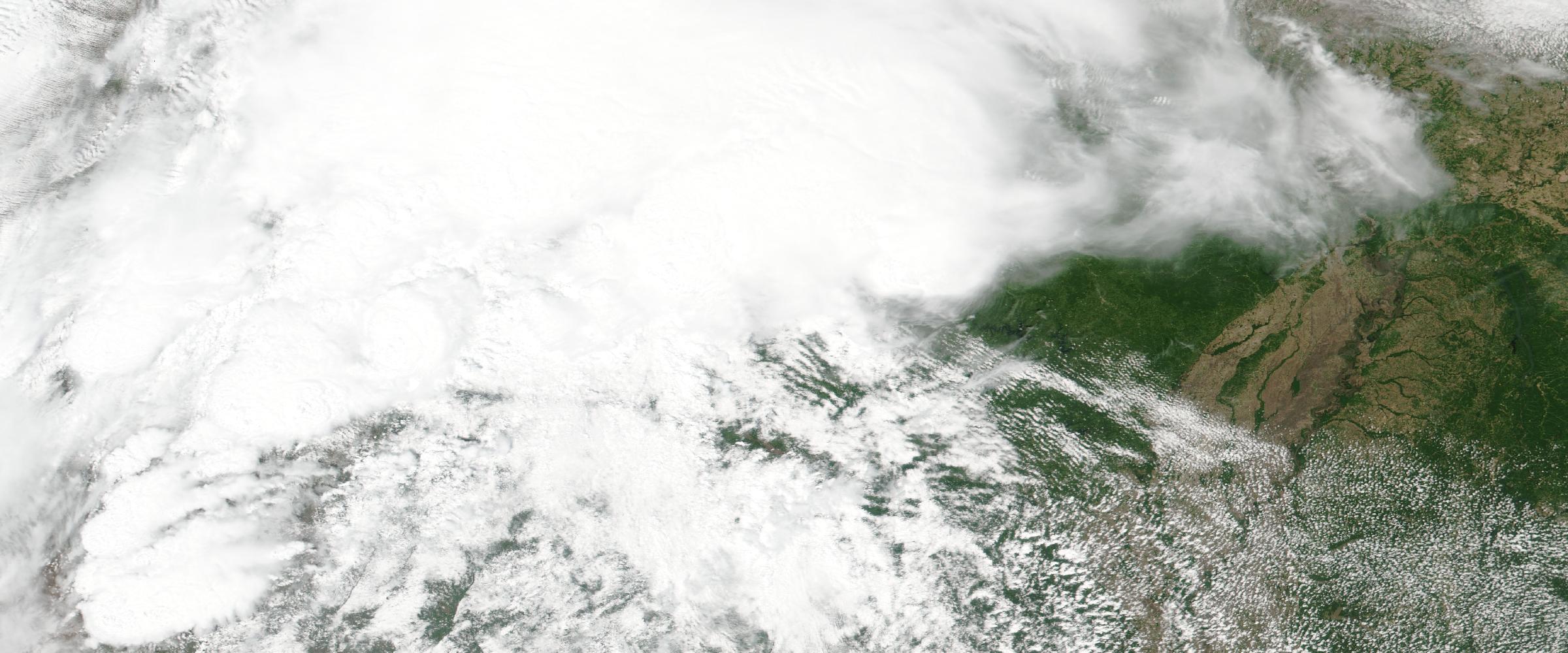
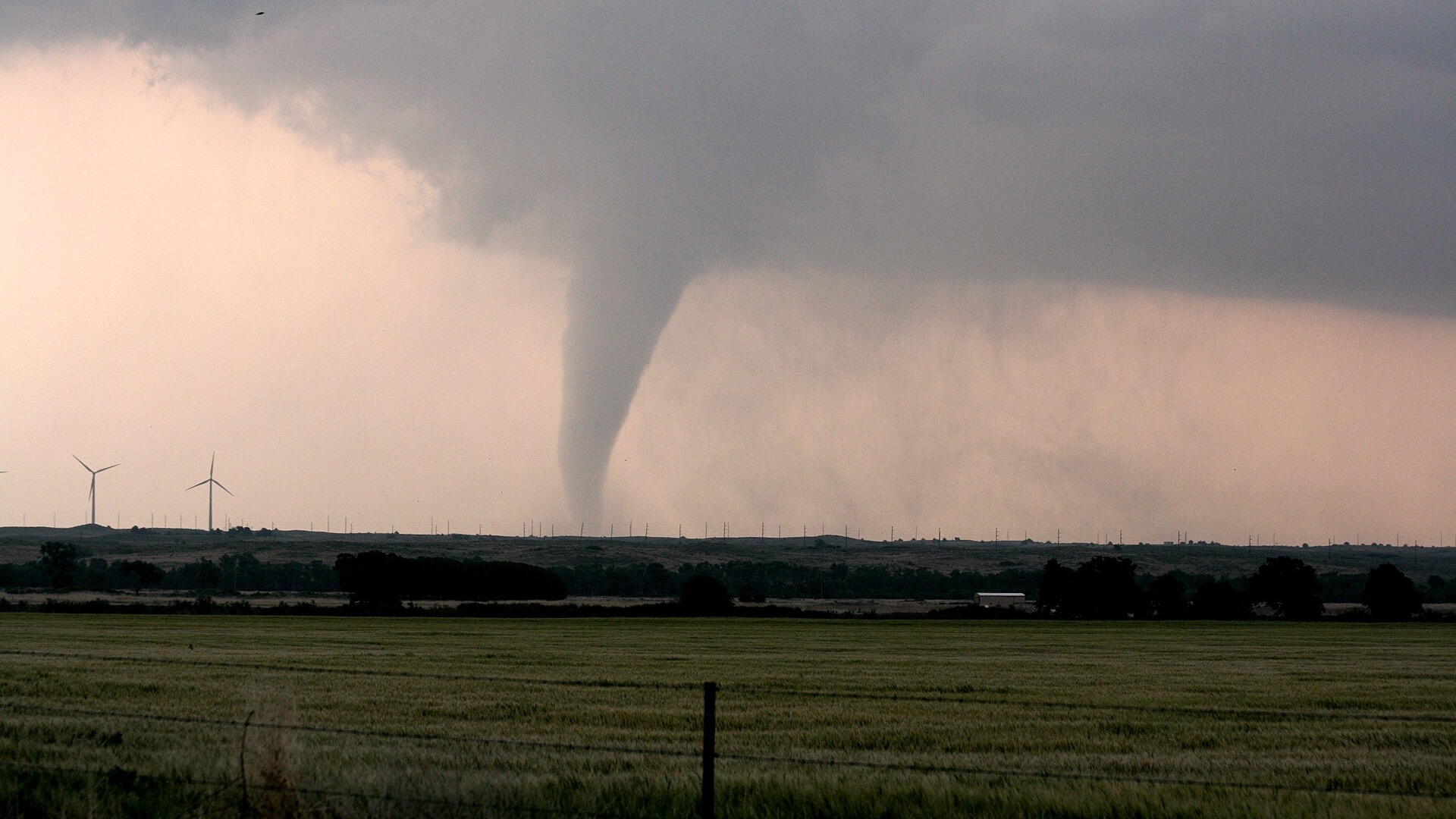
When people think about damaging tornadoes, the conversation often centers on the strongest events: EF4 and EF5 tornadoes capable of producing catastrophic destruction. For insurers, however, focusing primarily on the most extreme tornadoes can overlook a much broader source of risk.
A tornado does not have to be an EF5 to create significant insurance exposure.
Even lower-rated tornadoes can cause substantial property damage when they occur in densely populated areas, intersect concentrations of insured assets, or affect commercial and industrial properties. For insurers managing geographically distributed portfolios, understanding tornado risk therefore requires looking beyond maximum intensity.
The Enhanced Fujita (EF) Scale categorizes tornadoes based on estimated wind damage. It is an important way to characterize tornado intensity, but it does not by itself describe the financial consequences of an event.
Consider two hypothetical tornadoes.
The second event could potentially create greater aggregate insurance exposure despite having a lower EF rating. This illustrates a fundamental principle of catastrophe risk:
Hazard intensity and financial impact are related, but they are not the same thing.
Put tornado tracks next to your insured locations
Historical Event Intelligence delivers tornado events as track geometry with dates, severity and source provenance — ready to intersect with your own portfolio data.
Insurance risk emerges from the interaction between a hazard and the assets exposed to it. For tornadoes, that means considering factors such as:
A tornado with a relatively modest intensity rating can still intersect thousands of insured properties. Conversely, an extremely intense tornado can occur in an area with comparatively limited exposure. This is why insurers increasingly need to evaluate the hazard and the portfolio together.
A tornado may be small in geographic terms compared with a hurricane or large-scale flood, but its narrow path can intersect a surprisingly concentrated group of assets.
For an insurer, the question isn't simply:
“How strong was the tornado?”
It may be:
“How much insured exposure was located along its path?”
A single event can intersect a concentration of residential properties, retail locations, manufacturing facilities, distribution centers, or other commercial assets. Understanding these concentrations can help catastrophe and portfolio teams assess potential accumulation and prioritize post-event analysis.
The EF Scale begins at EF0 and extends through EF5. The majority of tornadoes are at the lower end of the scale. That does not mean they are irrelevant to insurers.
Even relatively lower-intensity tornadoes can damage roofs, siding, windows, vehicles, outbuildings, commercial structures, and other property. The actual outcome depends on the characteristics of the tornado, the structures encountered, and the surrounding environment.
Repeated events can also matter.
An insurer with substantial exposure across a tornado-prone region may experience numerous lower-intensity events over time. While any individual event may not resemble a catastrophic EF4 or EF5, the aggregate impact across a portfolio can still be meaningful.
Catastrophe risk is often discussed in terms of extreme events. But insurance portfolios also have to account for the frequency of less extreme events.
A portfolio might experience:
Looking only at the last category provides an incomplete picture of the hazard environment.
Historical event intelligence can help insurers understand the full distribution of tornado activity across their portfolios, including where events have occurred, how frequently they have occurred, and how their footprints have intersected insured locations. This can provide useful context for underwriting, portfolio management, and catastrophe analysis.
An EF rating is valuable information, but it is only one attribute of a tornado event. Modern event intelligence can provide a broader set of information, including:
When these characteristics are combined with portfolio data, insurers can move beyond simply counting tornadoes by EF rating. They can begin asking more practical questions:
These questions connect meteorological intelligence to insurance risk.
For insurers, tornado risk can be thought of as an interaction between three components:
Hazard × Exposure × Vulnerability
The hazard describes the tornado itself—its location, intensity, track, timing, and other characteristics. Exposure describes what is located in its path—homes, businesses, facilities, vehicles, infrastructure, and insured values. Vulnerability describes how those assets may respond to the hazard based on factors such as construction, occupancy, and other characteristics.
An EF5 designation tells insurers something important about the hazard. But it does not tell them how much exposure was in the path or what the resulting losses will be. That requires connecting event intelligence with location and property information.
The same principle applies before, during, and after a tornado event.
Before and during an event, real-time intelligence can help organizations identify developing tornado activity and understand where the hazard is moving.
Immediately after an event, event footprints and available severity information can help identify potentially affected areas and insured locations.
Over the longer term, historical tornado intelligence can help insurers analyze recurring patterns of exposure across their portfolios.
Together, these capabilities provide a more complete view of tornado risk than relying on a single warning or intensity classification.
The most extreme tornadoes will always deserve attention. But for insurers, meaningful tornado risk exists across the intensity spectrum. A lower-rated tornado can intersect a dense concentration of insured property. A series of moderate events can generate recurring claims. And a relatively narrow tornado path can produce significant exposure when it crosses a heavily insured area.
The key question is therefore not simply:
“How strong was the tornado?”
It is:
“What did the tornado intersect, and what happened there?”
By combining detailed tornado event intelligence with location-level exposure data, insurers can develop a more complete understanding of the hazard across their portfolios—from frequent lower-intensity events to the rarest and most severe tornadoes.
Tornado risk isn't defined by the EF rating alone. It's defined by the interaction between the event and everything in its path.
Explore the historical record
Decades of reconstructed, verified catastrophes — browse the Historical Event Intelligence overview, or request sample data for your own portfolio.
Do only EF4 and EF5 tornadoes matter to insurers? No. The EF Scale describes estimated wind damage, not financial consequence. A lower-rated tornado crossing a densely developed area with thousands of insured homes, businesses and warehouses can create greater aggregate exposure than a violent tornado over sparsely populated country. Insurance risk comes from the interaction between the hazard and the assets in its path.
What should insurers analyze besides a tornado's EF rating? Path length and width, duration, geographic location, population density, the mix of residential and commercial development, construction characteristics, the concentration of insured values, and the number of policies exposed. Combined with portfolio data, these support practical questions such as how many insured properties the event intersected and how much value sat along the path.
Why does tornado frequency matter as much as extreme events? A portfolio concentrated in a tornado-prone region may see many lower-intensity events over time. No single one resembles a catastrophic EF4 or EF5, but the aggregate effect across the book can still be meaningful. Looking only at the rarest events gives an incomplete picture of the hazard environment.









-min.png)
.png)

.png)


Decision-ready intelligence for understanding what's happening, what is impacted, and what to do next. Global hazard, severe weather, catastrophe, and physical risk intelligence trusted by governments, enterprises, insurers, humanitarian organizations, and technology platforms worldwide.
Request DemoContact Us

