


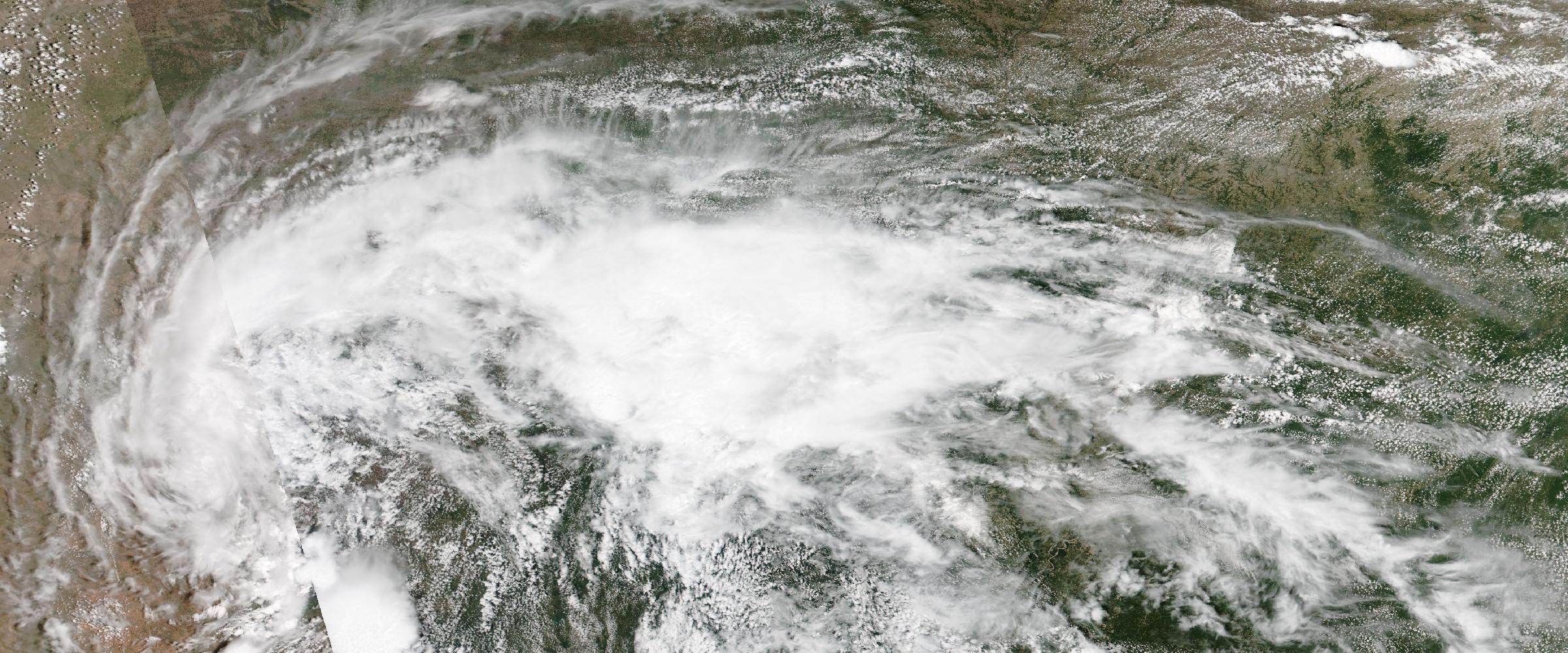
One page for the whole year — every count, every notable outbreak, every rating that matters. Updated as surveys land. Last updated: September 16, 2026.
2026 has been a loud tornado year that keeps refusing to produce a historic one. Through September 15, the National Weather Service has issued 2,699 tornado warnings — with a March that delivered the year's defining outbreaks, an April that made severe weather a national story for a week, a June that quietly became the biggest warning month of the year, and a September that ran at triple its normal severe-weather volume. And still: no EF5, anywhere — the strongest rated tornadoes of 2026 remain EF3.
January — 40 warnings · February — 89. A quiet winter start, activity confined mostly to the Gulf South's cool-season risk.
March — 349 warnings, and the year's defining month. Two outbreak sequences a week apart: March 5–7 produced the Union City, Michigan EF3 — Michigan's strongest tornado in nearly half a century — and March 10–12 produced the year's other EF3, a long-track tornado from Kankakee–Aroma Park, Illinois into Lake Village–Roselawn, Indiana. Our archive logged over 1,100 tornado records in March alone, triple any other month. Our analysis of the March outbreak →
April — 639 warnings, severe weather as a national story. The April 20–27 severe convective storm week put warned storms over roughly a third of the country; our coverage counted 39 tornadoes and 785 hail reports from the sequence, none rated above EF3. (Searching for an Omaha tornado that April? What the data actually shows →)
May — 249 warnings. Genuinely quiet by May standards — the climatological peak month underperformed its reputation this year.
June — 696 warnings, the year's peak. The biggest warning month of 2026 arrived on schedule, spread broadly across the Plains and Midwest rather than concentrated in a single historic outbreak.
July — 334 warnings, and Ohio's day. The month's signature event: the July 21 Ohio outbreak, where surveys by four NWS offices ultimately confirmed nine tornadoes — including two EF2s in Washington County found on a second field survey days later, a textbook case of how tornado history gets written in drafts.
August — 227 warnings, and a record falls. On August 19, the NWS Pittsburgh office confirmed its 30th tornado of 2026 — an EF-0 in Armstrong County — breaking the office's all-time annual record of 29, set only in 2024. Two record years in three seasons for western Pennsylvania.
September (through the 15th) — 76 warnings, in a month that shouldn't have them. The shoulder season didn't arrive: September 4–14 alone produced 25 tornado warnings, 29 tornado reports, and ten surveyed damage paths from the Carolinas to New Mexico, at roughly three times the window's normal severe-thunderstorm volume — plus, per widespread reporting, Detroit's first tornado since 1997 on September 3.
Warning counts come from the NWS warning archive and are complete to the day. Confirmed tornadoes, ratings, and paths come from NWS ground surveys, which land days to weeks after each event — and second surveys sometimes find tornadoes the first pass missed, as July's Washington County EF2s showed. We never infer a rating from anything but a surveyed path. The deeper record behind this page — 106,000+ US tornado records with footprints, ratings, and population exposure — is queryable by place, date, and severity, and the live tornado picture runs continuously.
The fall secondary season — October into November — is climatologically the year's second act, and 2026 has already shown a pattern of refusing to go quiet when the calendar says it should. This page updates monthly, and immediately after any major outbreak.
The record behind the record
DisasterAWARE Historical Event Intelligence holds 106,000+ US tornado records with ratings, footprints, and exposure — queryable by place, date, and severity.
Explore the historical record
Decades of reconstructed, verified catastrophes — browse the Historical Event Intelligence overview, or request sample data for your own portfolio.
How many tornadoes have there been in 2026? Through September 15, 2026, the National Weather Service has issued 2,699 tornado warnings. Confirmed-tornado totals are always lower than warning counts and settle slowly as ground surveys complete — this page tracks both, updating monthly, and counts nothing as confirmed without an NWS survey.
Was there an EF5 tornado in 2026? No. As of September 16, 2026, no tornado in 2026 has been rated EF5. The most recent EF5 in the United States remains the Enderlin, North Dakota tornado of June 20, 2025.
What is the strongest tornado of 2026? The strongest rated tornadoes of 2026 so far are EF3: the Union City, Michigan tornado of the March 5–7 outbreak — Michigan's strongest in nearly 50 years — and the long-track EF3 that ran from Kankakee–Aroma Park, Illinois into Lake Village–Roselawn, Indiana during the March 10–12 outbreak.
What was the biggest tornado outbreak of 2026? By significant tornadoes, the March outbreak sequences; by breadth, the April 20–27 severe weather week, which produced 39 tornadoes and 785 hail reports across roughly a third of the country; by single-state surprise, the July 21 Ohio outbreak's nine confirmed tornadoes.
Which state broke a tornado record in 2026? Western Pennsylvania: the NWS Pittsburgh office confirmed its 30th tornado of 2026 in August, breaking its all-time annual record of 29 — which had been set just two years earlier, in 2024.


















-min.png)


.png)


.png)




Decision-ready intelligence for understanding what's happening, what is impacted, and what to do next. Global hazard, severe weather, catastrophe, and physical risk intelligence trusted by governments, enterprises, insurers, humanitarian organizations, and technology platforms worldwide.
Request DemoContact Us

