


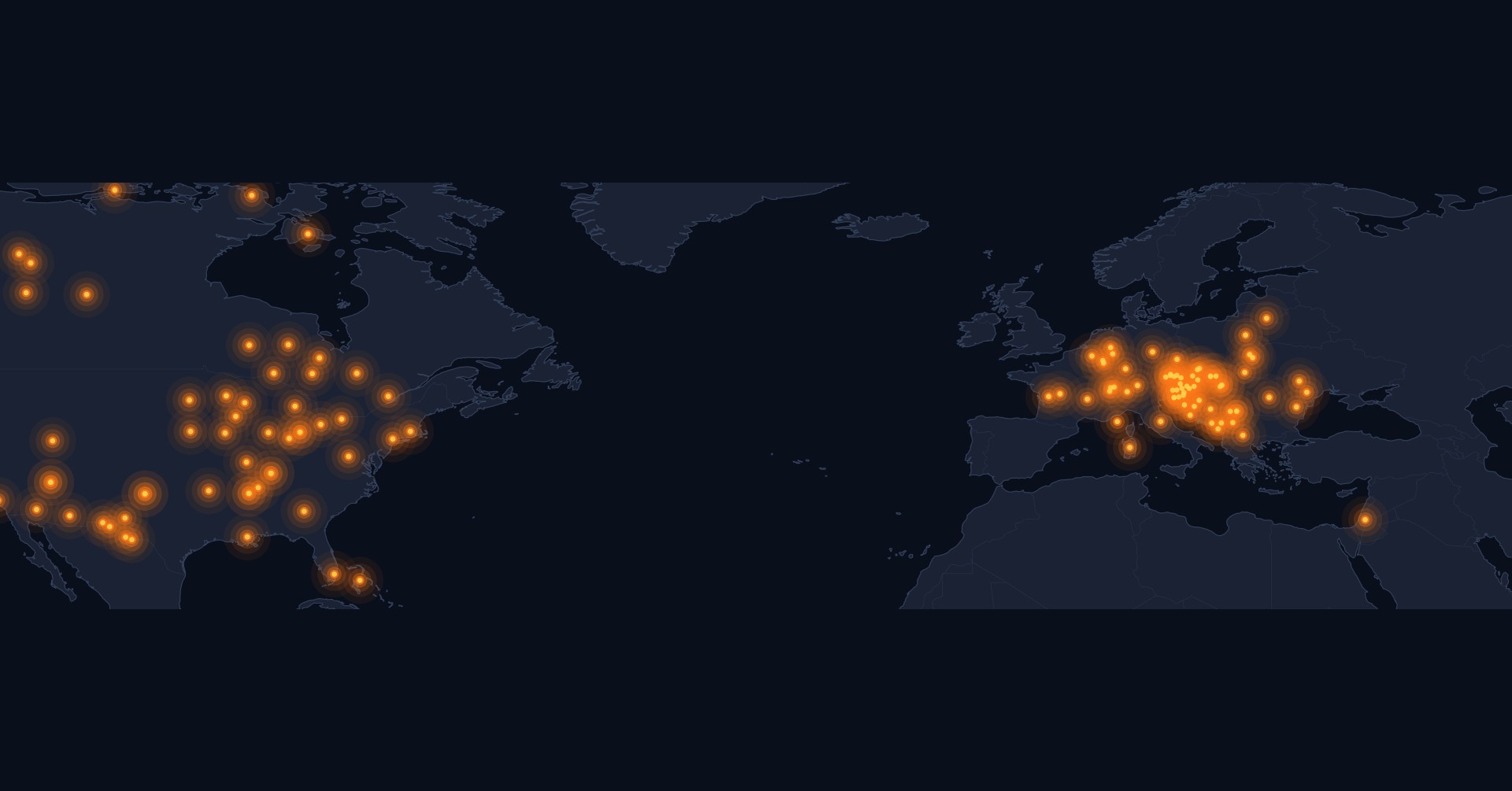
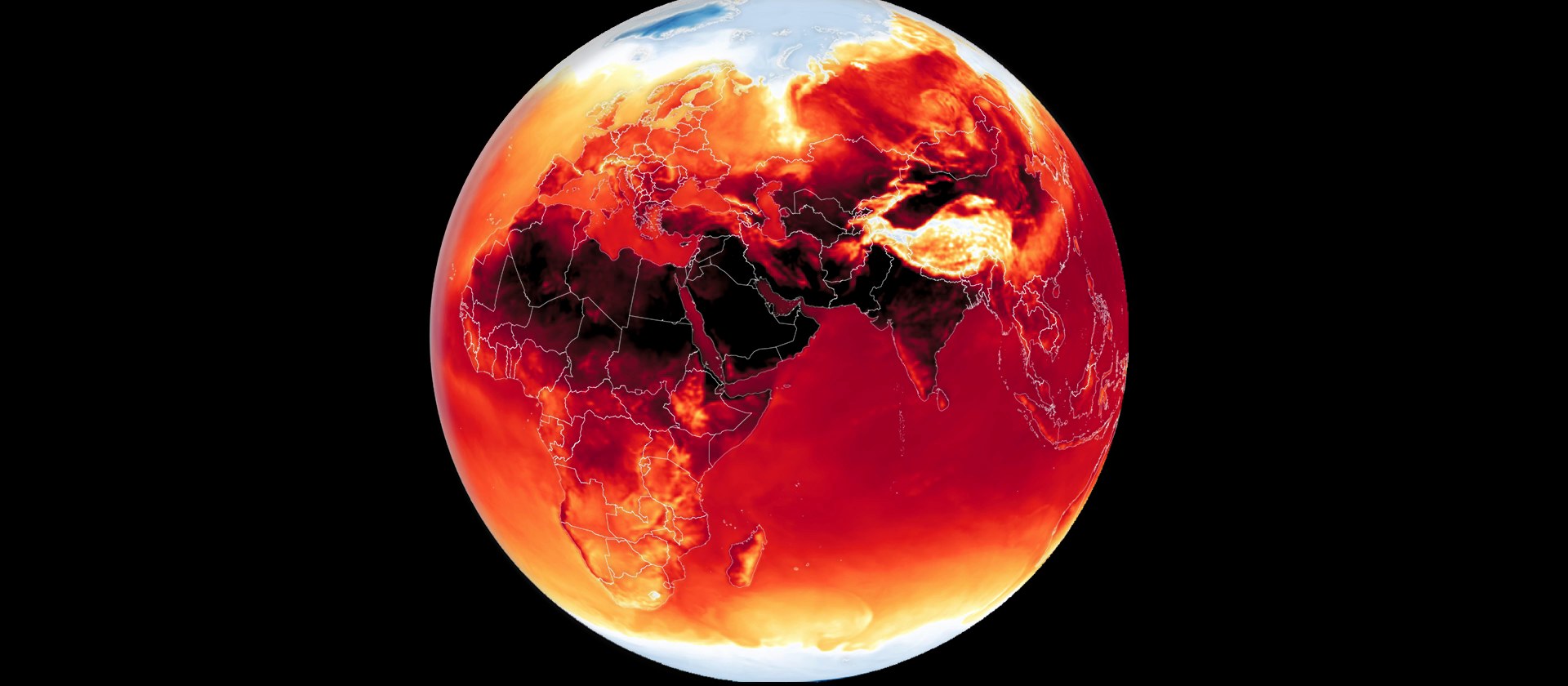
Three weeks ago this brief reported that the Northern Hemisphere heat belt had "closed" — 185 agency-issued heat alerts assembling simultaneously across five continents. This week the belt did not just close; it intensified into two distinct, simultaneous heat domes. DisasterAWARE is carrying 767 distinct agency-issued heat alerts across the 10-day window — 375 at WARNING, 42 at WATCH, 332 at ADVISORY, and 18 at INFORMATION — spread across roughly 40 countries and more than 500 separately delineated locations. That is more than four times the 185 alerts of the June 16 brief and the densest heat-alert footprint this brief has ever recorded. The weight sits in two places. Europe is the larger one: 687 of the 767 alerts fall on European and Eastern-Mediterranean meteorological services, with Austria alone issuing 126, China's CMA 101, Slovakia 62, Poland 47, Greece 35, Germany 33, France 26, and a continuous WARNING-to-ADVISORY band running through the Balkans, Central Europe, and the Mediterranean rim. The second dome is forming over North America: 50 U.S. National Weather Service heat alerts and 20 Environment and Climate Change Canada warnings, with the U.S. signal explicitly forecast to converge on the eastern half of the country across the July 4 holiday weekend — a Northeastern Excessive-Heat WATCH spanning New York, New Jersey, Pennsylvania, Connecticut, Massachusetts, Vermont, and New Hampshire valid July 1 through July 5, WARNING-level heat through July 4 across the Upper Midwest, the Ohio Valley, and the Mid-South, and a Central-and-Eastern-United-States advisory running to Independence Day itself.
Every heat alert above is an official agency forecast — Environment Canada for the Canadian warnings, the U.S. National Weather Service for the American sites, MeteoSwiss, Météo-France, Greece's Hellenic National Meteorological Service, Austria's GeoSphere, the China Meteorological Administration, and three dozen other national services for the rest. They are forecasts and warnings, not casualty-confirmed events, and we label severity precisely throughout. They are different in kind from the 351 active wildfires reported below, which are observed thermal signatures from NASA FIRMS turned into lifecycle-tracked incidents with ground corroboration arriving in the days after detection; and different again from the confirmed earthquakes, eruptions, and disease outbreaks in the secondary sections, which are occurred events. We report all three and label which is which on every line.
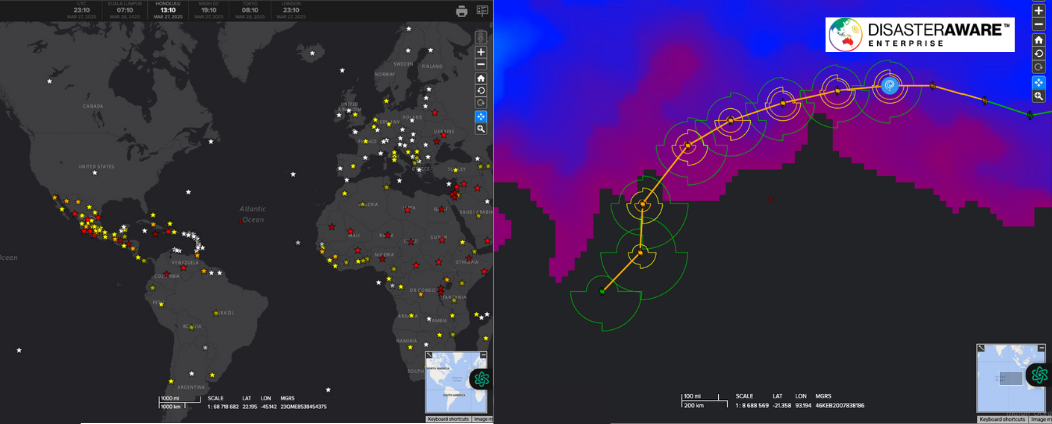
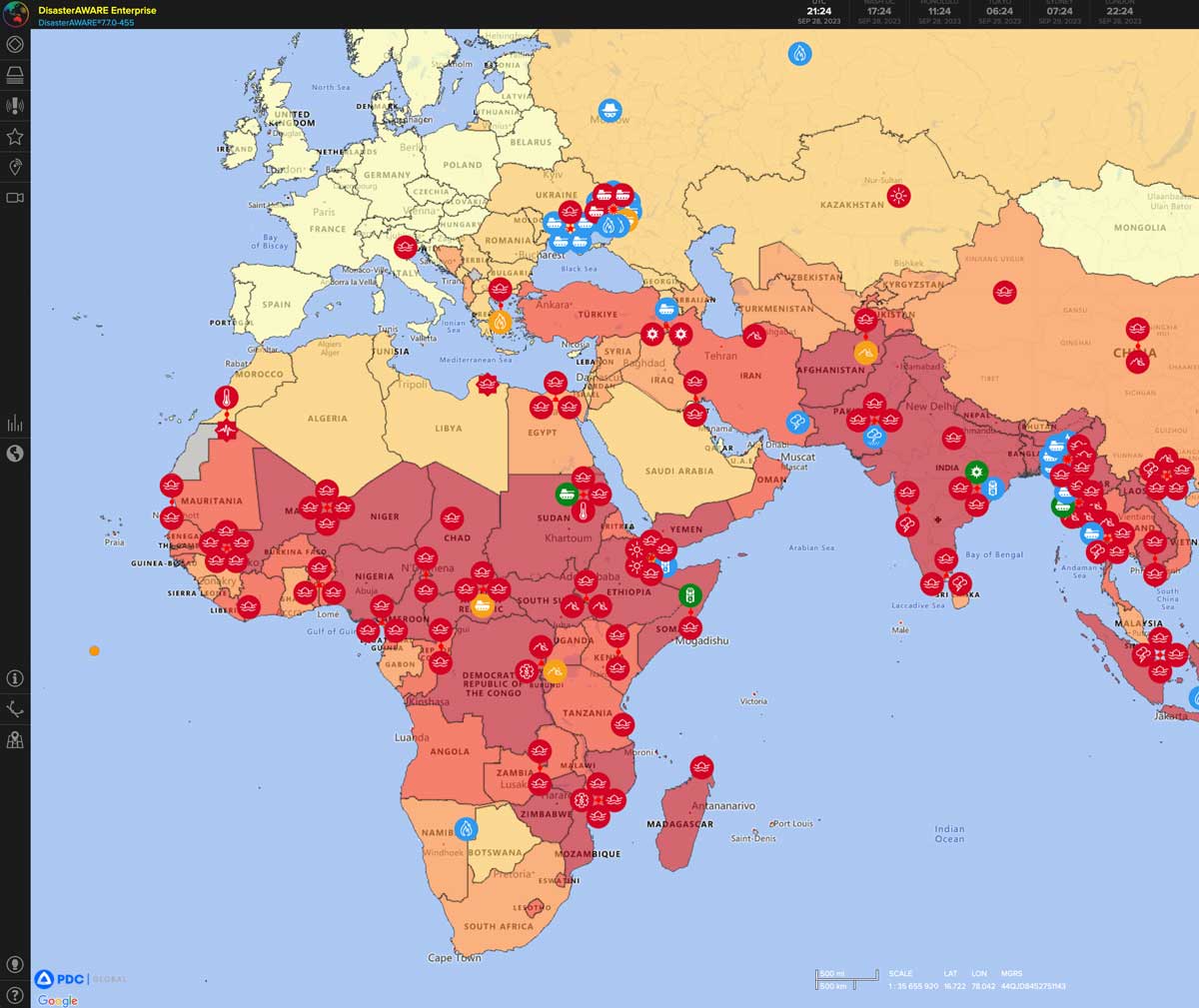
The default map view shows the European heat dome at full extent — the continuous WARNING-to-ADVISORY band from Iberia through the Alps and the Balkans. Toggle the legend's hidden layers — the North American heat alerts and the eastern-U.S. July 4 forecast band, the 351 active wildfires, the Canadian smoke air-quality warnings, the 12 active volcanoes, the Venezuela and Kamchatka earthquakes, South American floods and storms, the disease-outbreak layer, and active COMBAT zones — to see the full week's hazard picture. The heat-forecast layer is drawn separately and labeled as forecast/warning, not confirmed event.
Open map full screen in a new tab ↗
See events like this as they unfold
DisasterAWARE Enterprise monitors 30+ hazard types worldwide in real time — with the population, infrastructure, and assets exposed under each one.
Europe is the center of gravity this week. Of the 767 heat alerts in the window, 687 were issued by European and Eastern-Mediterranean national meteorological services, and the issuance rate climbed steadily across the ten days — from a single-digit trickle on June 18–19 to 118 alerts issued on June 27 and 100 on June 28. That is not a single hotspot moving across the map; it is a continent simultaneously under formal alert.
The concentration is densest in Central Europe and the Balkans. Austria's GeoSphere service issued 126 alerts — the single highest national count in the dataset — across its states and alpine valleys. Slovakia's Hydrometeorological Institute added 62, Poland's IMGW 47, the Czech Republic 13, Hungary 14, and Slovenia 13. The Western Balkans form a continuous block: Bosnia and Herzegovina 21, Serbia 20, Croatia 14, North Macedonia 8, Montenegro 7, Romania 10, Bulgaria 3. To the west, Météo-France issued 26 and Germany's DWD 33. The Mediterranean rim — Greece 35, Italy 16, Portugal 4, plus Spain and Andorra — carries its own dense band, the same coastline that runs the continent's highest summer wildfire risk.
Two features of the European picture are worth flagging for operational readers. First, the alert footprint reaches unusually far north. Latvia (7 alerts), Lithuania (6), Denmark (7), Finland (4), Sweden, and the Netherlands (8) are all carrying formal heat alerts — Baltic and Nordic geographies that rarely sit under heat warnings in June. Second, the severity mix has shifted upward relative to three weeks ago: 375 of the 767 alerts are at WARNING level, where the June 16 picture was dominated by ADVISORY-tier issuances. Switzerland, which anchored the European story in the June 16 brief at WATCH level, has been joined by a continent's worth of services that have moved to WARNING.
These are agency forecasts, not confirmed-casualty events — but the exposure behind them is real and large. The individual alerts carry population and vulnerable-population estimates running into the hundreds of thousands per region; aggregated across a continent, the population living under a formal heat alert this week is in the tens of millions. The operational point is not a single number — it is that a business-continuity, supply-chain, or duty-of-care team operating anywhere from Lisbon to Riga is inside the alert footprint this week.
The second dome is North American, and unlike the European one — which is at peak now — the U.S. signal is a forecast converging on a specific date: the Independence Day weekend.
The clearest single indicator is a National Weather Service Excessive-Heat WATCH covering the Northeastern United States — New York, New Jersey, Pennsylvania, Connecticut, Massachusetts, Vermont, and New Hampshire — valid from July 1 through July 5. Behind it sits a band of WARNING-level Excessive Heat already issued for the holiday window: the Upper Midwest and Central Plains through July 4; Northern Ohio and Northern Indiana through July 3; the Mid-South — Southern Indiana, Western Kentucky, Middle Tennessee — through July 4; and metropolitan Chicago (Cook County, Illinois) through July 2. A Central-and-Eastern-United-States heat advisory runs to July 4 itself, and an Excessive-Heat WATCH for East Arkansas, North Mississippi, and Southeast Missouri covers July 1–3.
The corroborating signal in the news feed is unusually direct. Broadcast forecast offices across the eastern and central United States spent the close of the window messaging the same thing: "Oppressive Heat Builds This Week; Watching Shower and Storm Chances for the 4th," "Impact heat and storms through the 4th," "Summer heat, humidity bring spotty storm chances through holiday weekend," and "dangerous heat index values to follow." Several pair the heat with afternoon-thunderstorm and severe-weather risk — the classic Independence-Day compound in the eastern U.S., where peak heat, peak outdoor-gathering exposure, and convective storms land on the same afternoon.
That compound is the operational heart of the U.S. story. July 4 is the single largest outdoor-assembly day on the American calendar — parades, fairs, and fireworks crowds standing in afternoon sun — and the forecast places the densest heat exposure of the early summer directly underneath it, with thunderstorms threatening to scatter those crowds into the hottest part of the day. For event operators, municipal emergency managers, and large-venue duty-of-care teams, the heat alert and the severe-weather risk are not two separate planning problems; they are one.
It is worth being explicit about why a brief that leads with forecasts and warnings, rather than confirmed casualties, still leads with heat. Heat is, by a wide margin, the deadliest weather hazard in the developed world — it kills more people in a typical year than floods, tornadoes, and hurricanes combined — and almost all of that toll is preventable with lead time. Unlike an earthquake, which arrives without warning, a heat dome is forecast days ahead. The entire value of a heat warning is that it is issued before anyone is hurt.
That is also why heat casualties are invisible in a dataset of confirmed events until well after the fact. Heat does not collapse buildings or leave a burn scar a satellite can see; it works through the body — heat stroke, cardiovascular strain, the silent worsening of chronic conditions — and the deaths are counted weeks later in excess-mortality statistics, disproportionately among the elderly, the chronically ill, outdoor workers, and people without air conditioning. The individual alerts in this week's data flag exactly that vulnerable population, region by region. The operational implication is the inverse of most hazards: the time to act on heat is now, while it is still only a forecast — cooling centers, hydration and shade at outdoor events, checks on isolated elderly residents, and adjusted work-rest cycles for outdoor crews — not after the excess-mortality count comes in.
The connection between this week's heat and this week's fire is most legible over Canada, and it is a three-stage cascade rather than a single overlap.
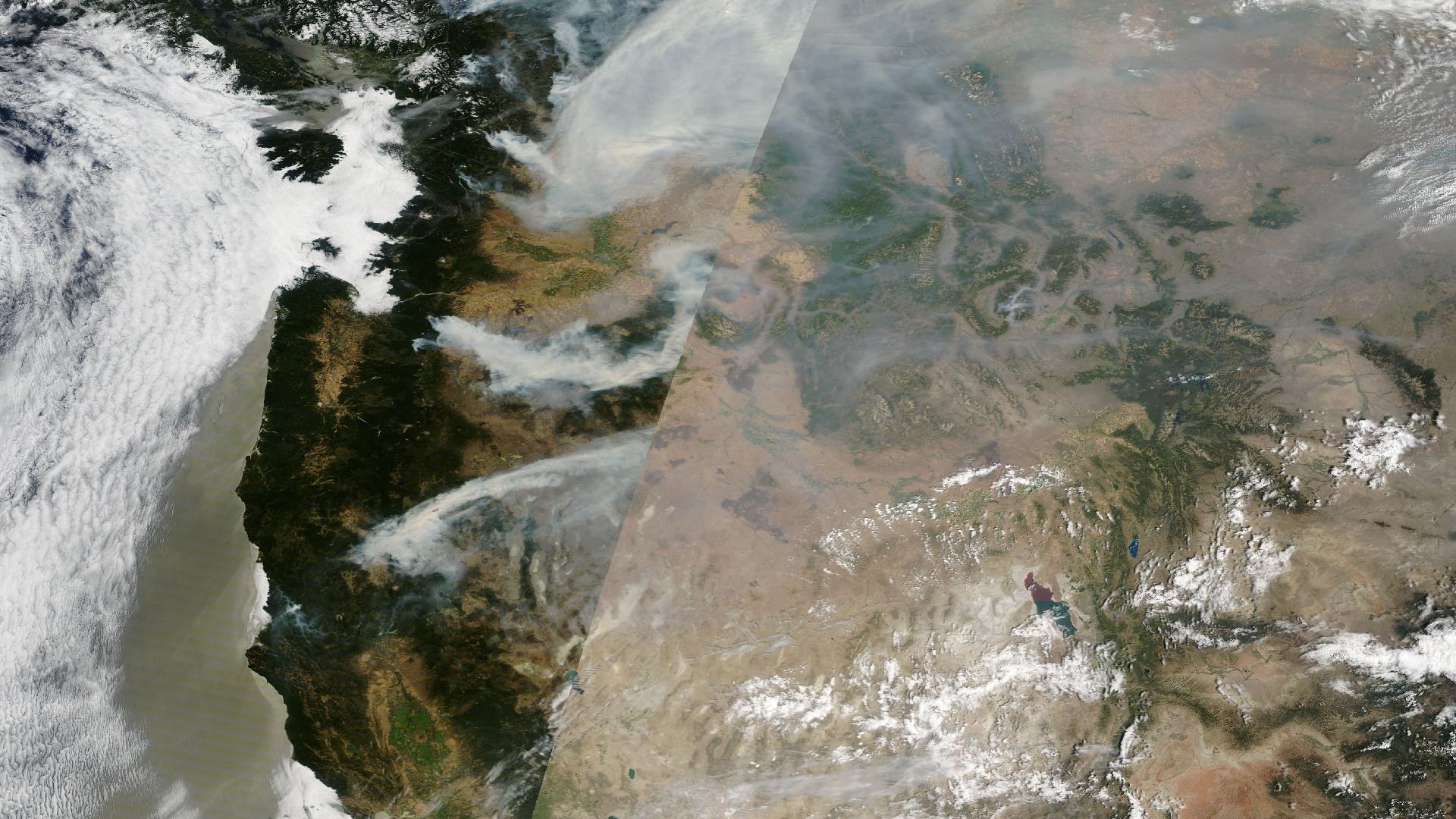
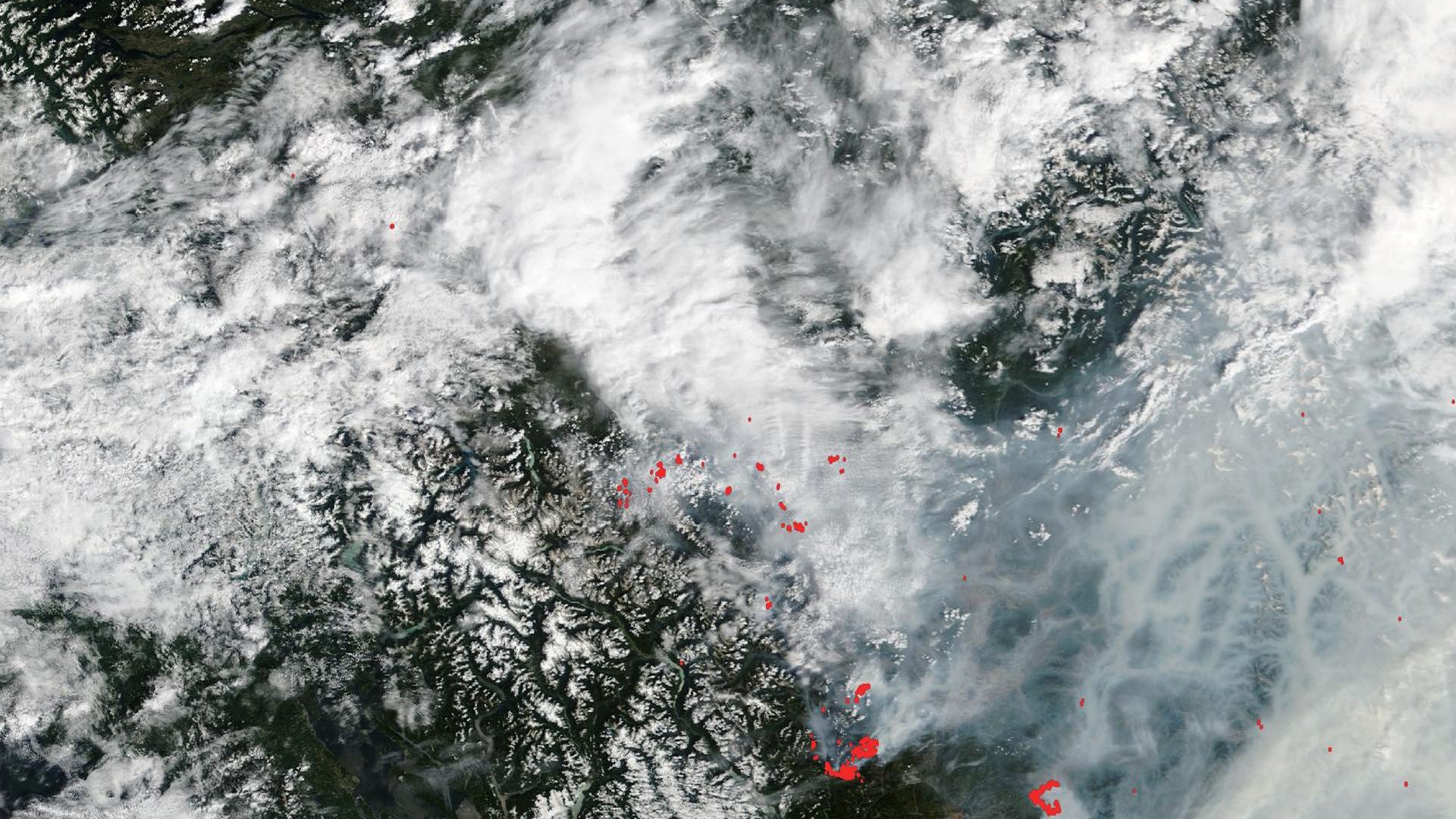
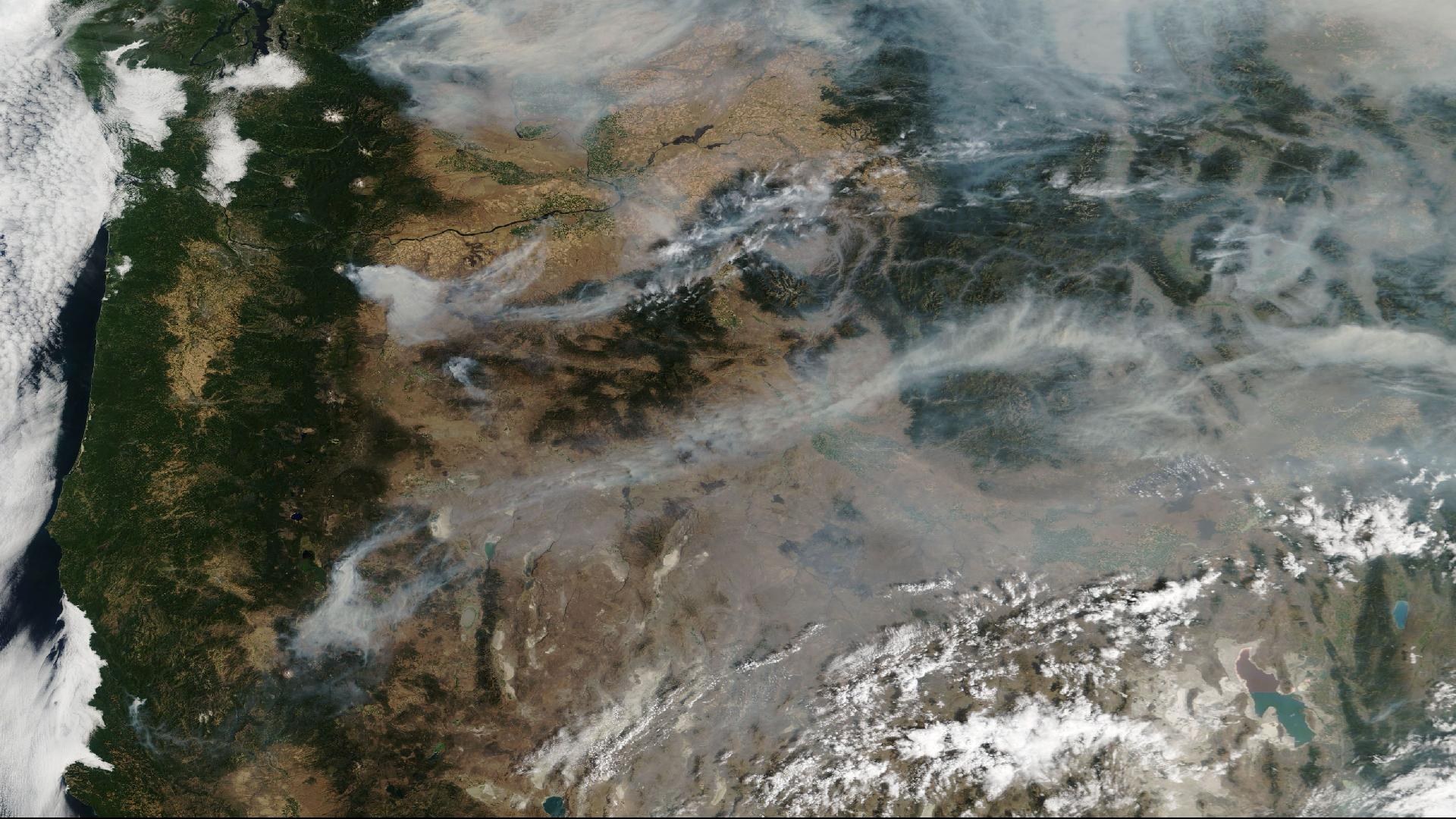
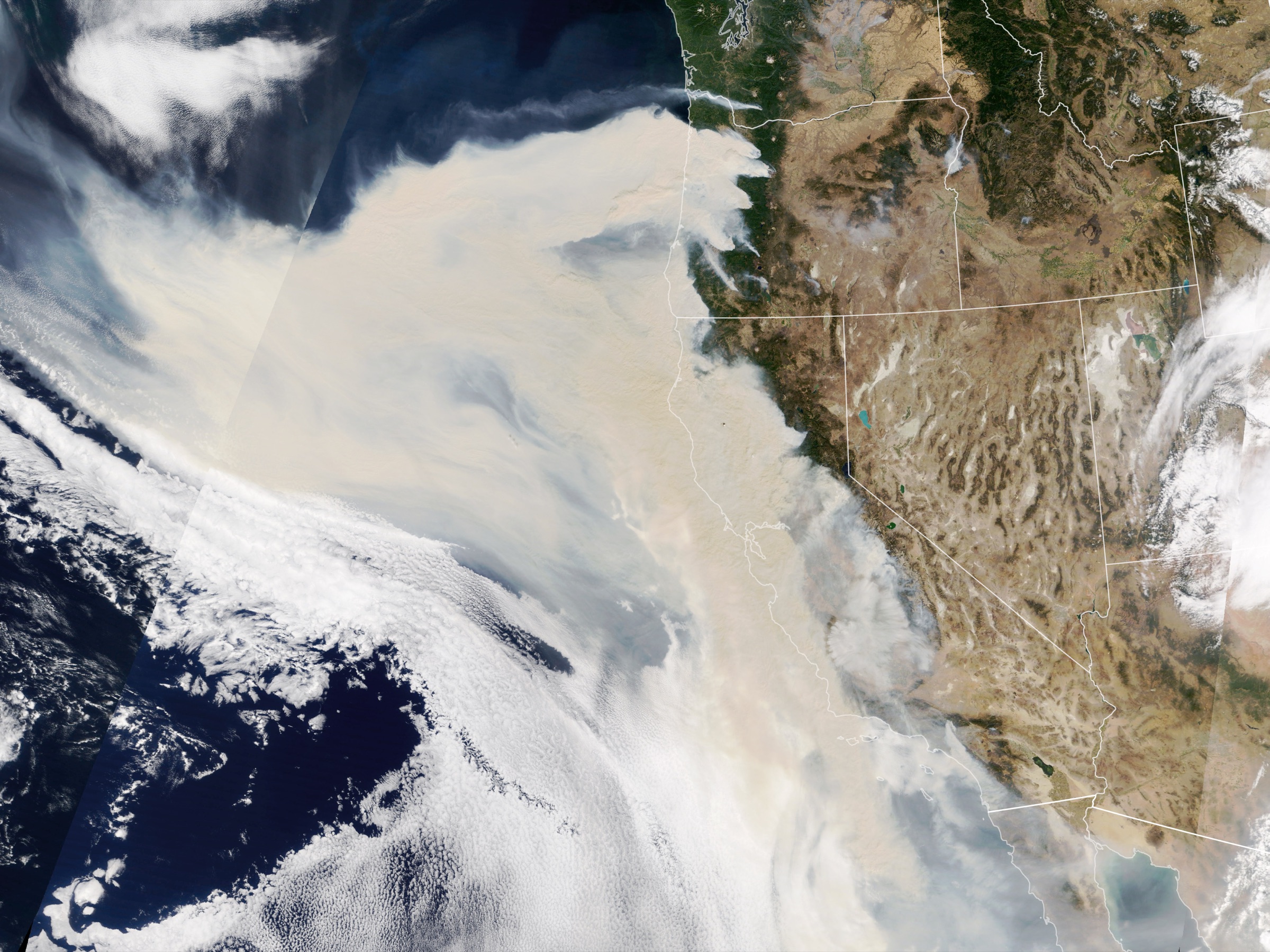
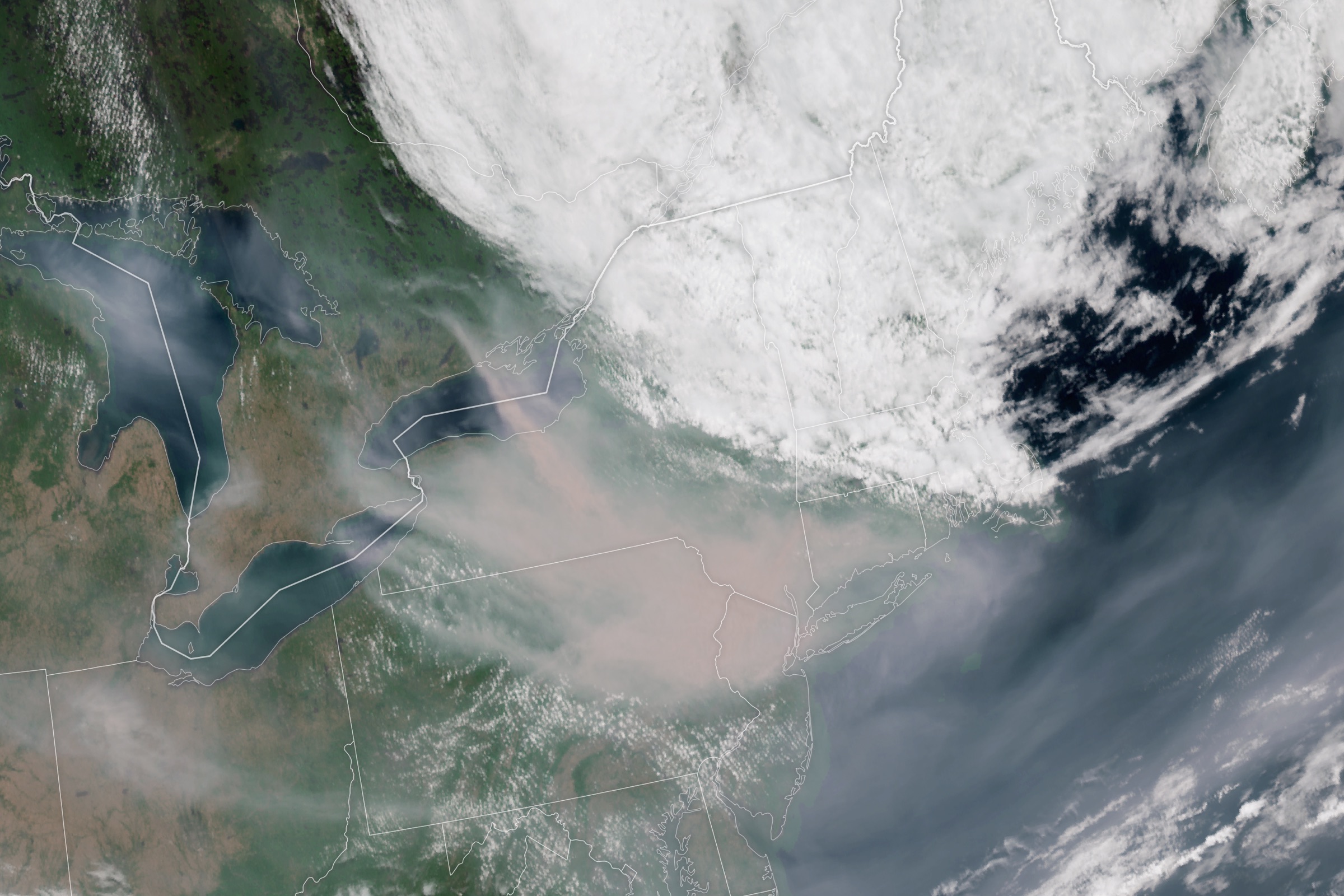
Canada is carrying 20 ECCC heat alerts, the second-largest national wildfire footprint in the dataset at 332 active and recently-active fires, and five wildfire-smoke Air-Quality WARNINGs — at Fort McMurray and Calgary in Alberta, La Ronge in Saskatchewan, Hay River in the Northwest Territories, and Eastmain in Québec — all active in the same window. The mechanism runs in order: heat dries the boreal fuel load, the fires that ignite in that fuel push smoke into downwind population centers, and the smoke generates a separate public-health hazard — air-quality warnings — hundreds of kilometers from any flame. DisasterAWARE classifies those smoke advisories under the biomedical/air-quality layer precisely because their victims are not the people near the fire; they are the people breathing its plume.
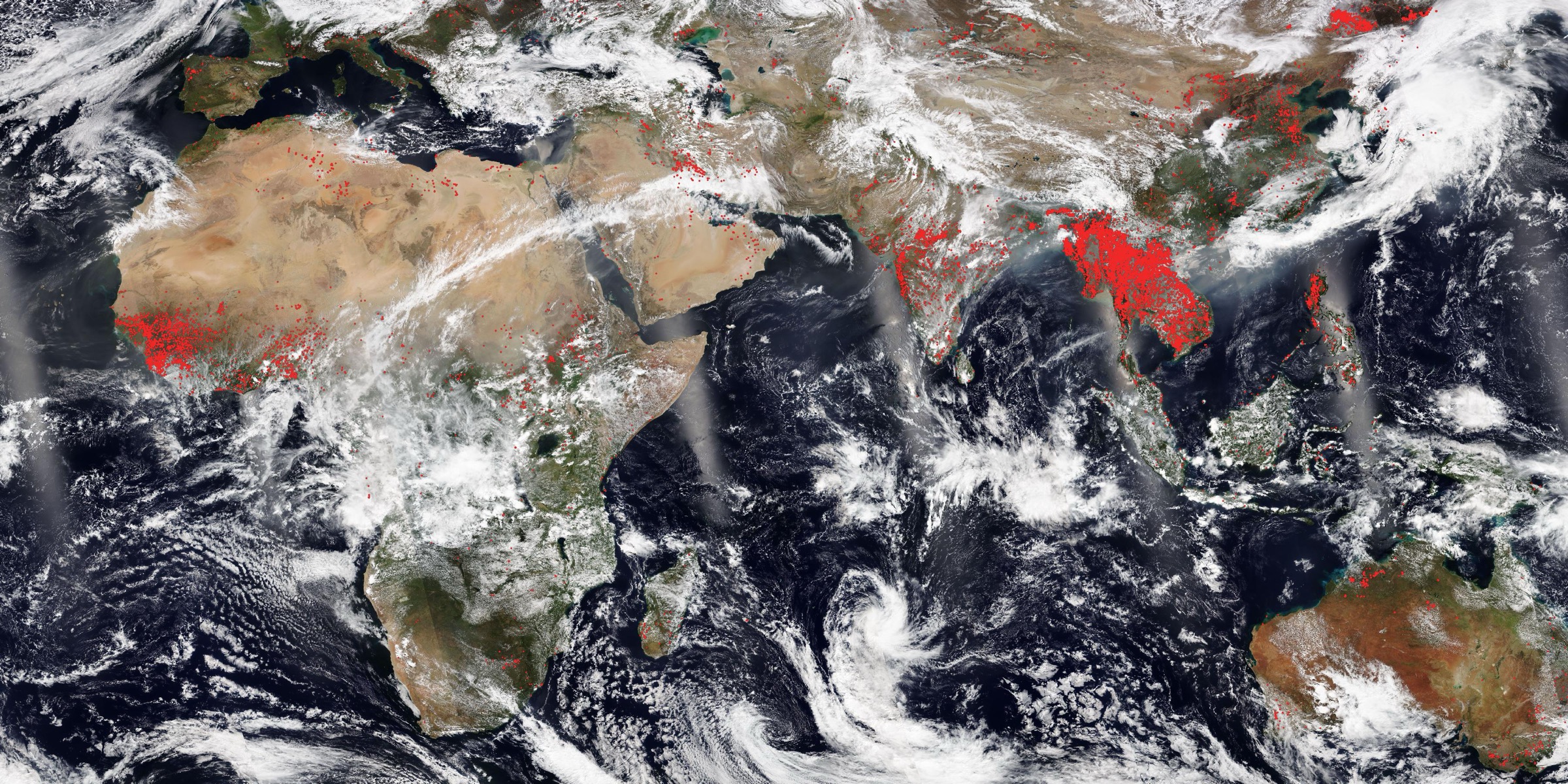
A note on the global fire numbers, to keep them honest. This week's 1,468-event wildfire footprint is the largest this brief has carried, but the raw country ranking is led by the Democratic Republic of the Congo (365), Angola (103), and other Central and Southern African nations whose fires are dry-season agricultural and savanna burning — a seasonal, largely anthropogenic pattern that is not driven by the Northern-Hemisphere heat domes. The heat-linked fire story is the boreal one: Canada (332) and Russia (247), the forests sitting directly under the same heat ridge that is generating the alerts. We separate the two rather than fold a 1,468 headline into a heat narrative it does not all belong to.
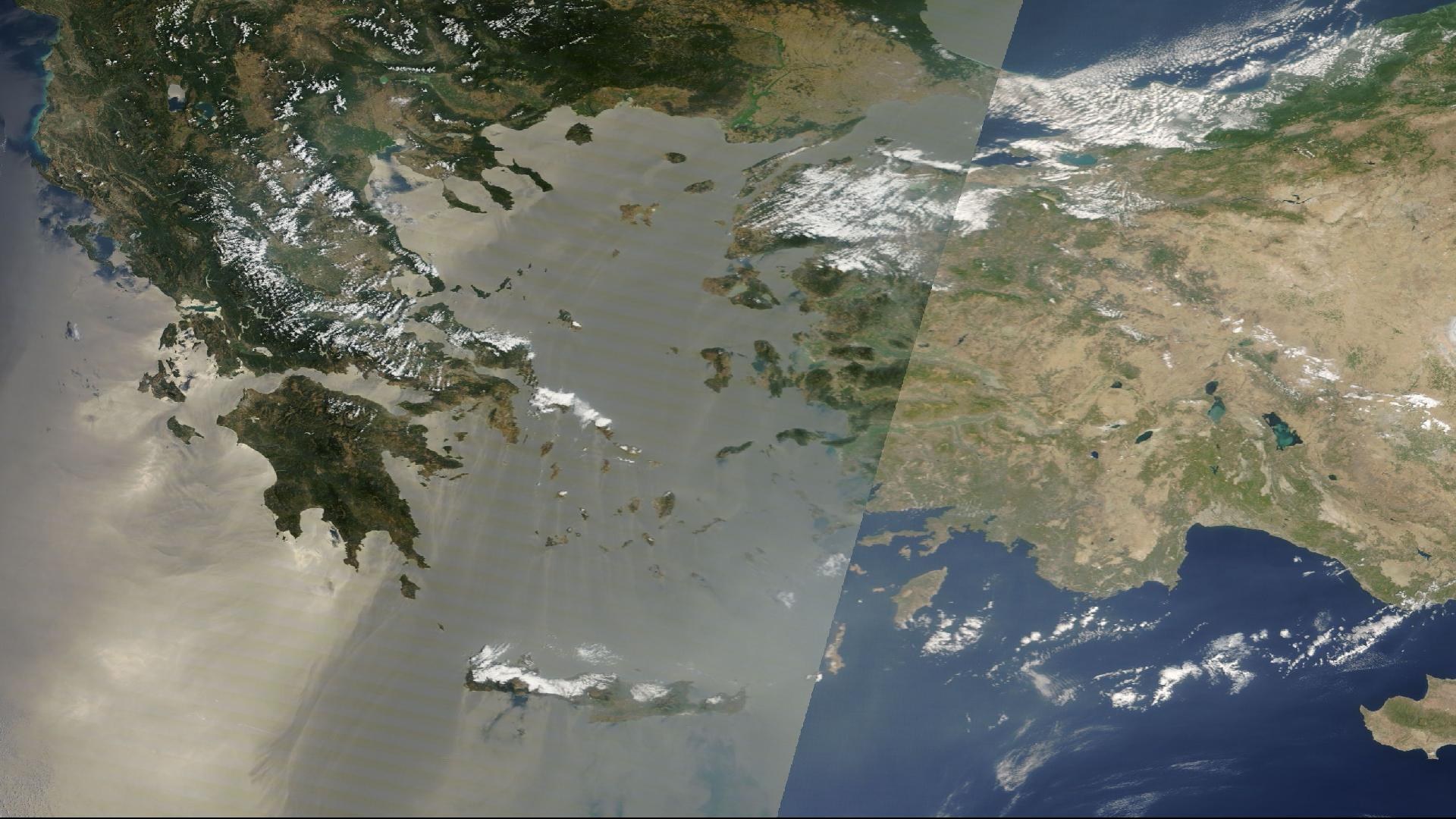
The single tightest compound-risk geography remains the Mediterranean rim, where three hazard layers sit on the same coastlines: formal heat alerts (Greece 35, Italy 16, southern France, Iberia), wildfire risk along the same Greek, Italian, Spanish, and southern-French coasts, and — though Etna has stepped back from the WARNING it held in the June 16 brief — a still-active Indonesian and Latin American volcano field globally. For a supply-chain, tourism, or insurance team operating in southern Europe, the heat advisory, the fire-weather risk, and the peak-season tourist density are a single overlaid operating picture this week, not three separate ones.
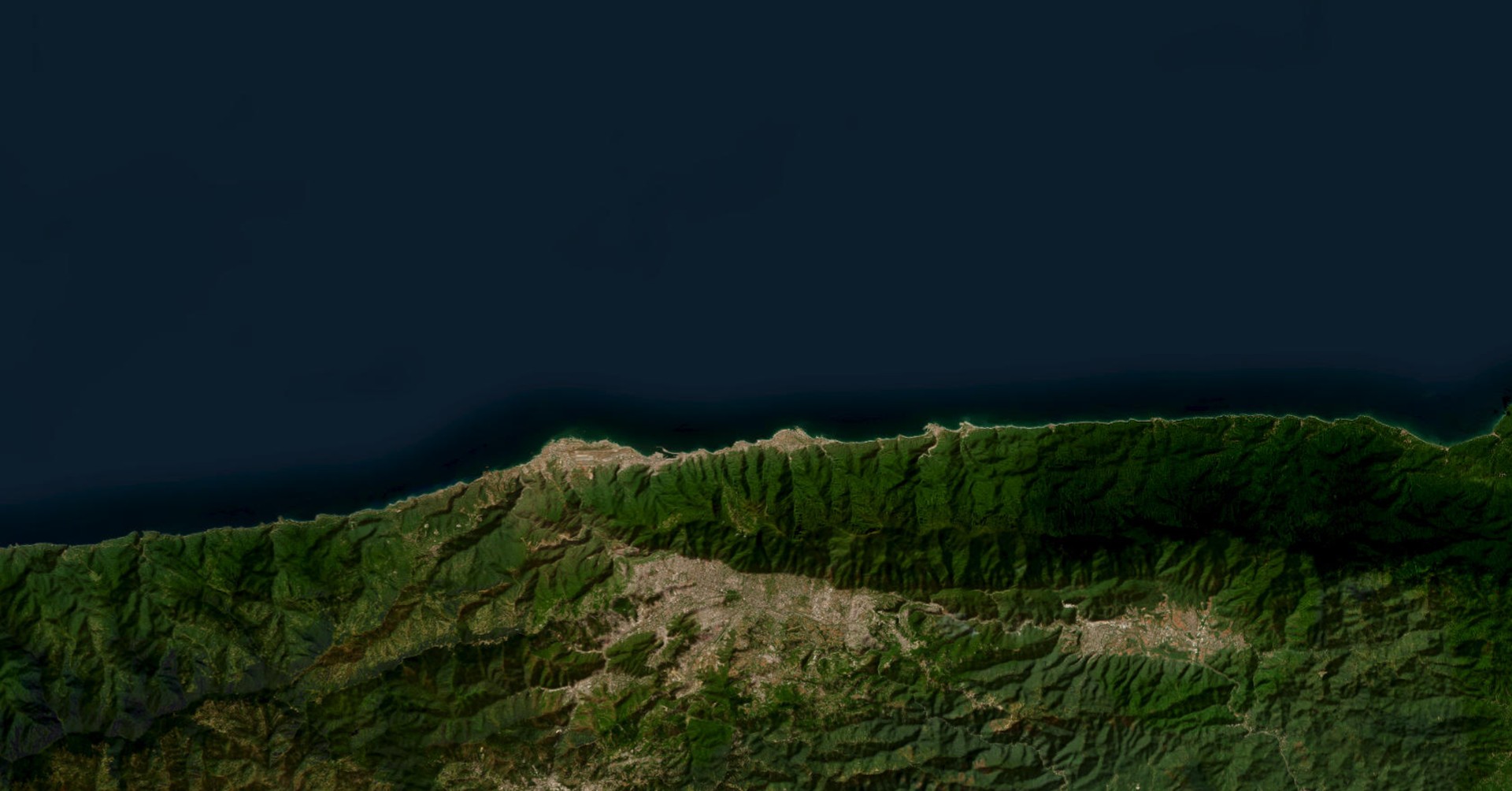
The deadliest event of the window was seismic, not thermal. On June 24, two consecutive major earthquakes — magnitude 7.2 followed by magnitude 7.5 — struck north-central Venezuela near Yumare. The official toll reported by humanitarian agencies has risen above 1,450 dead and 3,150 injured, with more than 12,700 displaced and over 500 aftershocks recorded. The casualties did not concentrate at the epicenter; they concentrated more than 200 kilometers to the east, along the coastal La Guaira corridor, for reasons rooted in seismic site amplification and building vulnerability. DisasterAWARE has published a dedicated deep-dive on the Venezuela earthquakes — the science of why the casualties clustered where they did, the multinational urban-search-and-rescue operation, and the exposure and shaking intelligence behind the response: Why So Many Died: Inside Venezuela's June 2026 Earthquake Doublet.
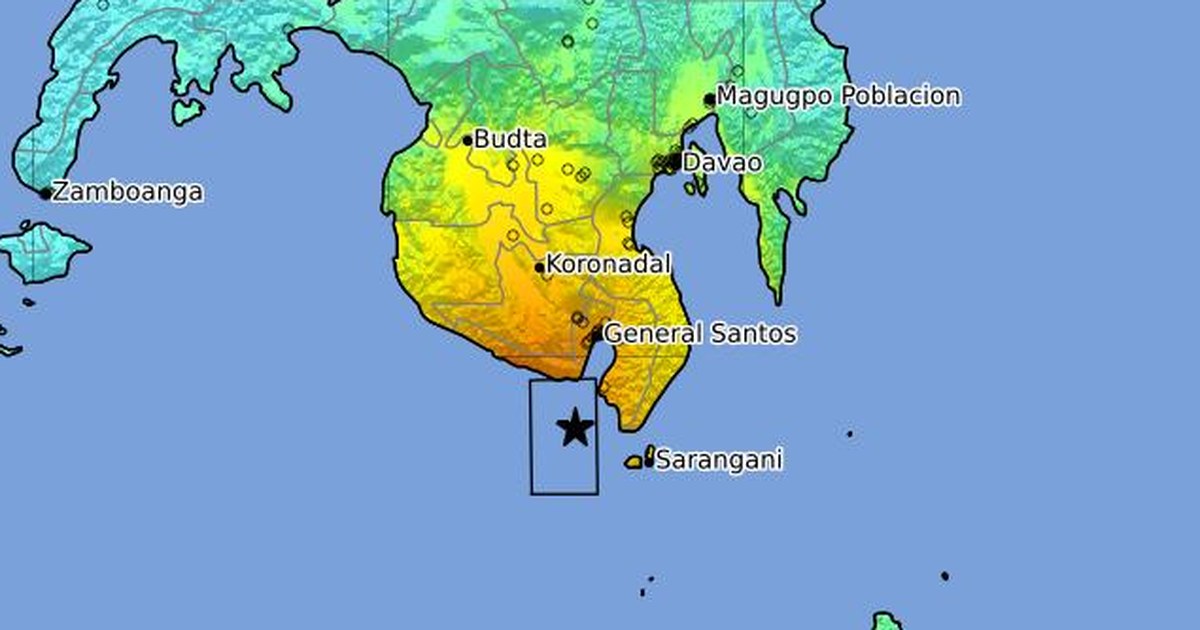
Venezuela was not the week's only major seismicity. A tight swarm of large earthquakes struck off Petropavlovsk-Kamchatsky, Russia, on June 18–20 — including two M6.6 events, a M6.0, and several M5.8s within roughly 140–185 km of the city — the most concentrated high-magnitude sequence of the week after Venezuela. The June 7 M7.8 Philippines event near Burias, covered in the June 8 brief, remains in active Response-Support status three weeks on. Six earthquakes globally sit at WARNING or WATCH at window close.
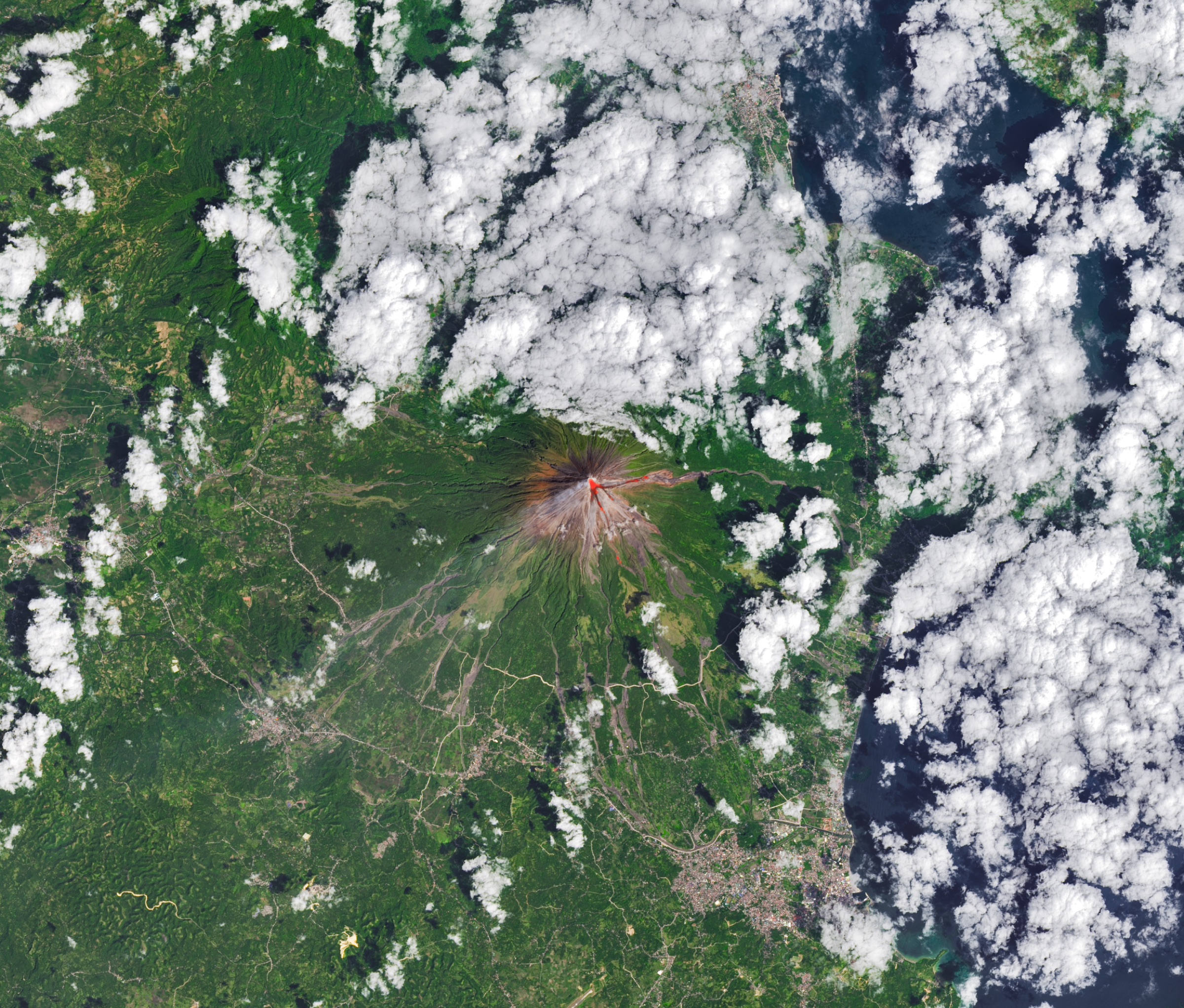
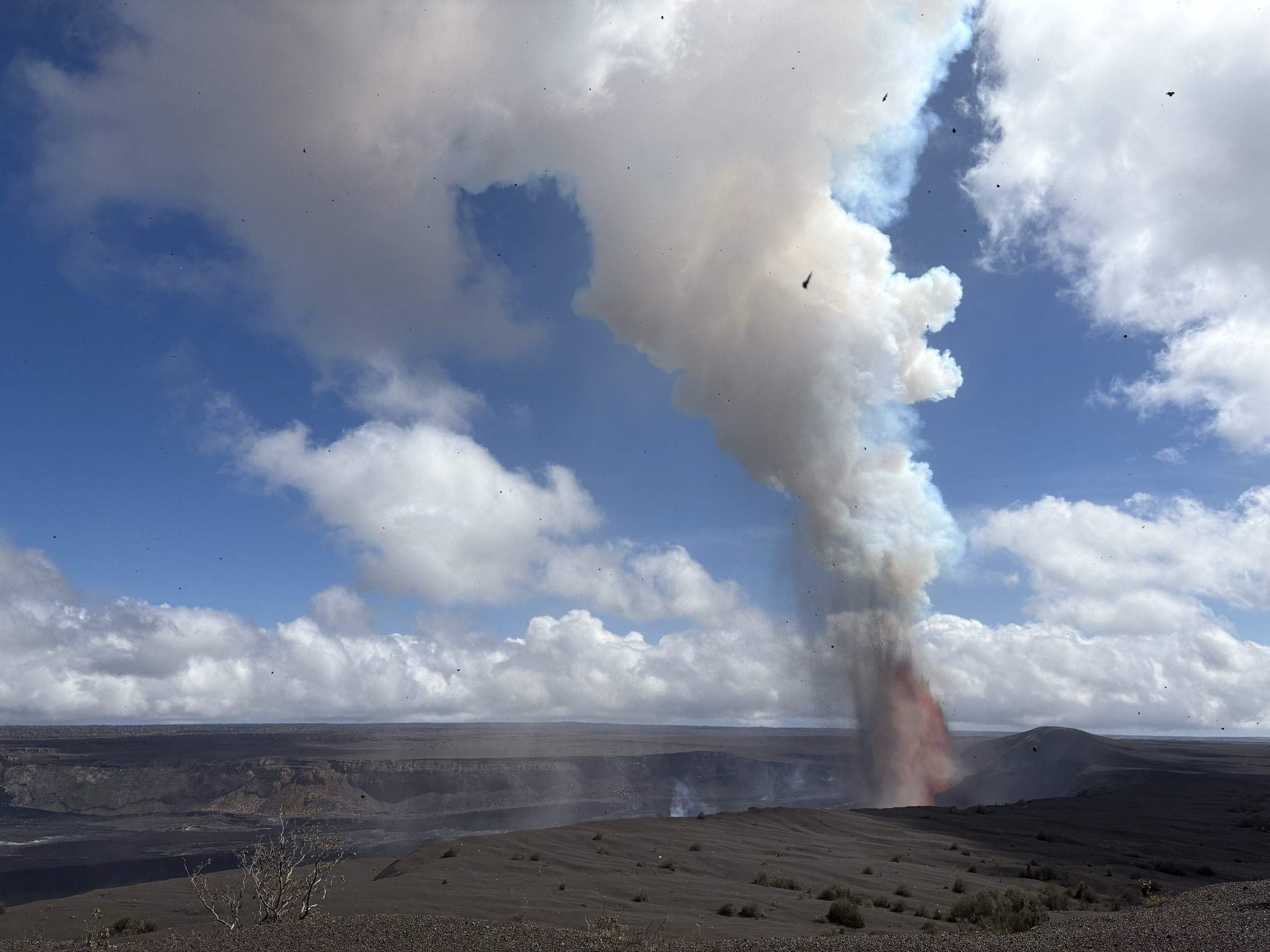
Volcanoes. Twelve volcanoes are active at WARNING or ADVISORY: Fuego and Santa María (Guatemala), Semeru, Ibu, Dukono, and Lewotobi (Indonesia), Mayon (Philippines), Reventador (Ecuador), and Sheveluch (Russia) at WARNING; Kilauea (United States) and Lewotolo (Indonesia) at ADVISORY. The Indonesian arc remains the densest volcanic geography in the dataset.
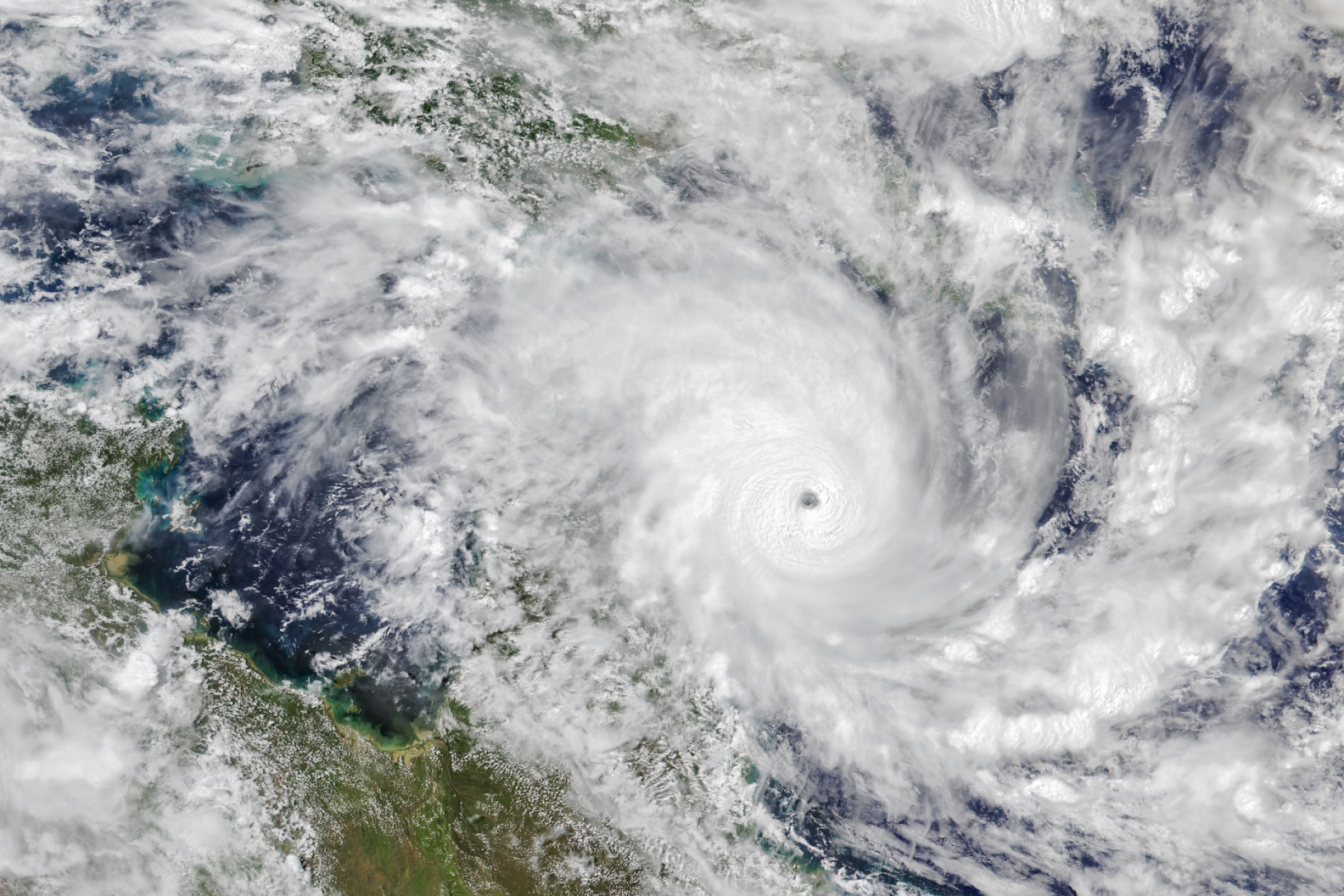
Floods and storms. South America is running its wet-season convective signal concurrent with the Northern-Hemisphere heat. Active flood WARNINGs cover Western Colombia and both Southern and Northwest Brazil; storm WARNINGs span Guyana, Suriname, Brazil, Peru, Panama, and Mexico, with severe-weather WARNINGs over North Island New Zealand and Eastern Malaysia. The two hemispheres are in opposite seasons, and the dataset shows it cleanly — heat and fire across the north, flood and storm across the equatorial and southern belt.
Disease. Of the 17 active biomedical events, twelve are disease outbreaks — the other five are the Canadian wildfire-smoke air-quality WARNINGs counted in the cascade above. The disease layer is led by an Ebola WARNING spanning the Democratic Republic of the Congo and Uganda. Cholera WARNINGs are active in Borno State (Nigeria) and across Sudan and South Sudan; measles outbreaks in Bangladesh, Peru, and Sierra Leone; dengue WARNINGs in New Caledonia, Samoa, Sri Lanka, and Vanuatu; and a multiple-outbreak designation at the Cox's Bazar displacement settlement in Bangladesh, where crowding and the monsoon compound the risk.
Conflict. Sixteen active COMBAT events, with Response-Support WARNINGs over Iran and Lebanon anchoring the Middle East theatre, airstrike activity across Gaza and the West Bank, and missile- and drone-strike activity across Ukraine (Dnipro, Kharkiv, Zaporizhzhia) and cross-border into Russia.
The heat story has not peaked. Europe's alert footprint is at full extent now, but the forecast pipeline — the WATCH and ADVISORY tiers sitting behind the 375 WARNINGs — points to several more days of issuance before any retreat. The American dome is still assembling: the Northeastern Excessive-Heat WATCH does not even begin until July 1, which means the eastern-U.S. peak is a forecast event landing squarely on the July 4 holiday weekend, not a current one. Expect the U.S. WARNING count to climb sharply as those WATCHes convert in the next several days, and expect the heat-plus-severe-storm compound to be the dominant operational picture across the eastern and central United States through the holiday.
Behind the heat, the supporting cast stays at or above recent levels: the largest wildfire footprint this brief has recorded, the Canadian smoke cascade, twelve active volcanoes, an Ebola outbreak back at WARNING, and a South American flood-and-storm season opening as the Northern Hemisphere bakes. And the Venezuela earthquake response — now in its transition from search-and-rescue to recovery, against an aftershock sequence that is still running — will remain the week's heaviest human toll for some time.
Everything in this brief — 767 heat forecasts from forty national meteorological services, 1,468 satellite-detected wildfires, twelve volcanoes, a deadly earthquake doublet, seventeen disease outbreaks, and sixteen conflict zones — arrives in DisasterAWARE as a single, severity-labeled, continuously updated operating picture, with every hazard distinguished as forecast, satellite-observed, or confirmed event. The platform does not just count alerts; it places each one against the population and infrastructure exposed beneath it, so that a duty-of-care, supply-chain, or emergency-management team can see, on one map, which of its people and assets sit inside a heat WARNING, a smoke plume, a fire perimeter, or an earthquake's shaking footprint — and can act on the forecast before the casualty count exists.
That is the difference this week makes plain. The European heat dome and the eastern-U.S. July 4 forecast are not yet measured in lives; they are still warnings. The entire purpose of an intelligence platform is to turn that lead time into action.
DisasterAWARE Weekly Intelligence Brief. Data period: June 19–29, 2026, drawn from the DisasterAWARE Enterprise hazard feed (active and historical), NASA FIRMS thermal detections, and forty national meteorological and geophysical services. Heat alerts are agency-issued forecasts and warnings, not confirmed-casualty events, and are labeled by severity throughout; wildfire detections are satellite-observed thermal signatures with ground corroboration following; earthquakes, eruptions, and disease outbreaks are confirmed occurred events. Alert and exposure figures reflect the data as of June 29, 2026 and are refined as official sources report. Produced by DisasterAWARE / Pacific Disaster Center.










-min.png)
.png)
.png)



Decision-ready intelligence for understanding what's happening, what is impacted, and what to do next. Global hazard, severe weather, catastrophe, and physical risk intelligence trusted by governments, enterprises, insurers, humanitarian organizations, and technology platforms worldwide.
Request DemoContact Us

