



Correction (August 31, 2026): An earlier version of this article reported that a tornado in Wells County, Indiana on March 10, 2026 was rated EF5. That was incorrect. The claim originated from a single erroneous data point in the NWS Damage Assessment Toolkit feed; the Wells County tornado occurred on March 11 and was rated EF0. No tornado in this outbreak was rated above EF3, and there has been no EF5 in the United States since Enderlin, North Dakota, on June 20, 2025. The article has been corrected throughout, and we thank the reader who flagged the error.
Further corrections (September 4, 2026): a review prompted by the above found additional errors, now fixed. The Kankakee and Aroma Park entries described a single EF3 tornado that had been listed twice, double-counting its casualties; they are now merged. Injury counts for the Three Rivers, Michigan and Jefferson, Texas tornadoes were overstated (110 and 20; actual 10 and 2), and a fatality was incorrectly attributed to the Three Rivers tornado. Outbreak totals are now 11 killed and 43 injured, replacing the previous 12 and 144+.
See events like this as they unfold
DisasterAWARE Enterprise monitors 30+ hazard types worldwide in real time — with the population, infrastructure, and assets exposed under each one.
The map below shows all ten EF2+ tornadoes from the outbreak, including NWS damage survey paths, warning polygons, local storm reports, and damage assessment data. Click any event to view its full timeline.
Map data: NWS damage assessment team (DAT) surveys, storm prediction center reports, and local storm reports. Visualization powered by DisasterAWARE.
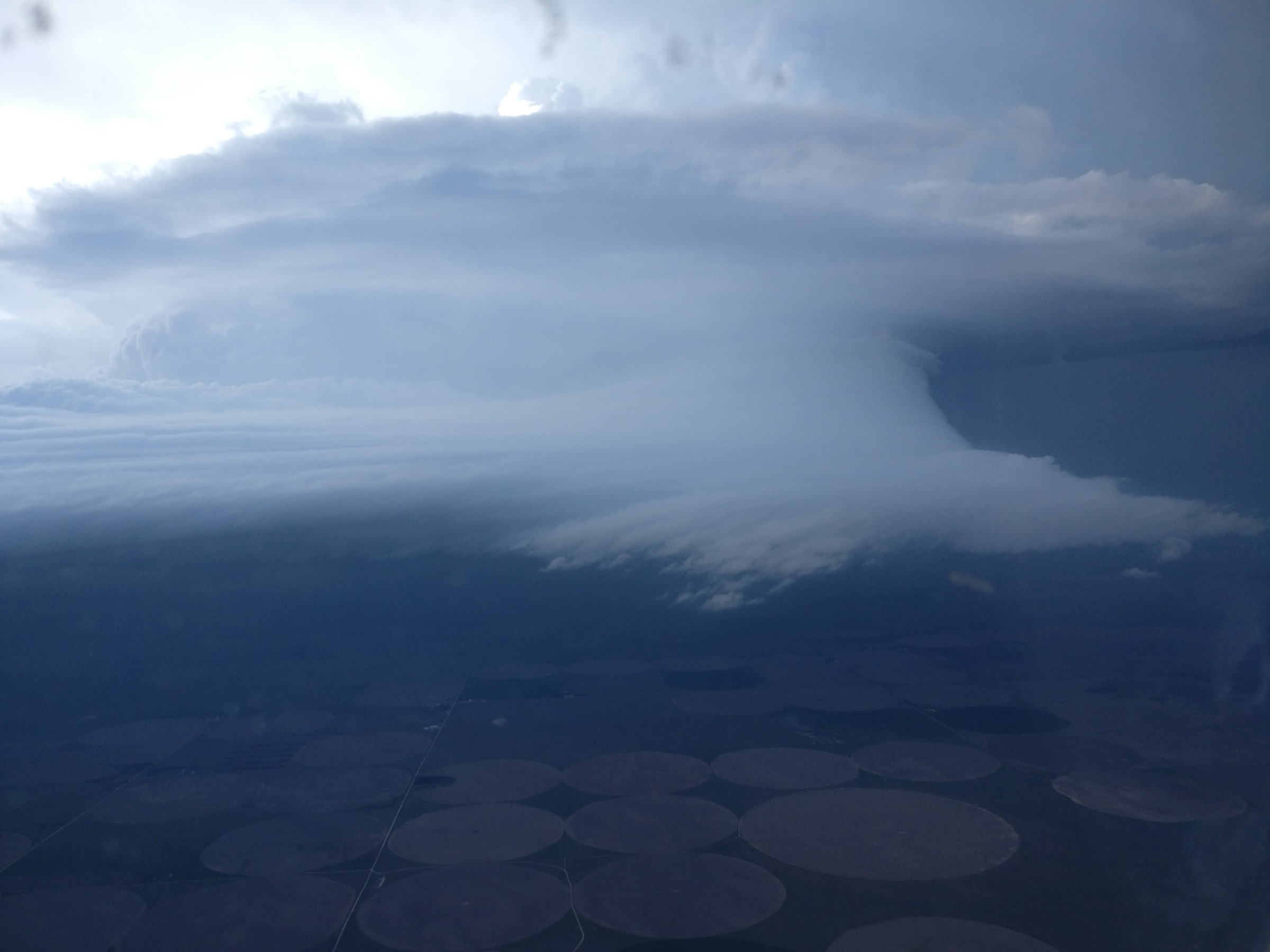
The outbreak began Wednesday evening when a powerful supercell developed across central Oklahoma. The Storm Prediction Center had issued a Moderate Risk for severe weather across parts of Oklahoma, Kansas, and northern Texas.
WFO: Norman (OUN) · 2 fatalities
The first significant tornado of the outbreak touched down near Helena in Alfalfa County and tracked northeast. A 47-year-old woman and her 13-year-old daughter from Fairview were killed when their vehicle was struck by the tornado near a highway intersection at approximately 10 p.m.
NWS damage assessment teams documented three distinct tornado paths from this supercell: an EF2 path stretching 19.1 miles, a second EF2 path of 7.1 miles, and an EF1 segment of 6.4 miles.
Thursday was the most violent day of the first wave. A single supercell developed in La Porte County, Indiana, just after 3 p.m. EST and tracked northeast into southwest Michigan, producing four tornadoes in rapid succession. Simultaneously, another wave of severe weather tore through northeastern Oklahoma.
WFO: Northern Indiana (IWX) · 10 injuries
The supercell's second tornado intensified as it approached Three Rivers in St. Joseph County, reaching EF2 intensity with winds of 130 mph. Dramatic footage captured the twister ripping the roof off a Menards store and tearing apart a nearby Dollar Tree. The tornado injured 10 people.
WFO: Northern Indiana (IWX) · 3 fatalities · 12 injuries
The deadliest tornado of the first wave touched down at approximately 4:33 p.m. on the northwest side of Union Lake in northern Branch County. It rapidly intensified into a multi-vortex tornado, reaching EF3 intensity with winds up to 160 mph — the strongest tornado to strike Michigan in 49 years and the earliest EF3 ever recorded in the state.
Three people were killed, including a 12-year-old boy, and 12 others were injured. Governor Gretchen Whitmer declared a state of emergency for the affected counties.
WFO: Tulsa (TSA) · 2 fatalities · 1 injury
Another deadly EF3 tornado ripped through Beggs in Okmulgee County, Oklahoma, with peak winds of 135–140 mph. Todd and Becky McClellan of Beggs were killed in the storm.
WFO: Tulsa (TSA) · No fatalities
A separate tornado was confirmed in Rogers County near Collinsville, rated EF2 with peak winds between 125–135 mph.
The outbreak's nocturnal tornadoes struck in the predawn hours of March 7 as the storm system pushed eastward — making them particularly dangerous nighttime tornadoes.
WFO: Shreveport (SHV) · 2 injuries
A tornado touched down at approximately 3:09 a.m., tracking toward Jefferson. Despite being on the ground for only 5 minutes, the tornado caused 20 injuries.
WFO: Shreveport (SHV) · 1 injury
A tornado struck at 5:37 a.m., tearing through the area west of Willisville with a 2.73-mile path and maximum winds of 125 mph.
After a brief lull, the outbreak roared back on March 10 with a second wave of severe weather that produced more significant tornadoes across Indiana and Illinois — including the strongest tornado of the entire outbreak.
WFO: Chicago (LOT) · 3 fatalities · 11 injuries
The strongest tornado of the entire outbreak developed from a long-track supercell across northeastern Illinois on the afternoon of March 10. It touched down near Aroma Park in Kankakee County and tracked northeast across the state line into Newton County, Indiana, striking Lake Village before continuing toward DeMotte — a continuous path of roughly 35 miles, with a maximum width near 1,550 yards. The tornado reached EF3 intensity with estimated peak winds of approximately 150 mph.
Three people were killed, among them Ed and Arlene Kozlowski of Lake Village, Indiana, whose home was struck directly in what officials described as "total devastation" for the community. Eleven others were injured. Three tornado warnings were issued along the path, and NWS damage assessment teams documented 125 survey points, with an EF breakdown of EF0 (33), EF1 (71), EF2 (11), EF3 (3), unrated (6), and not applicable (1) — underscoring the tornado's sustained intensity over a long track.
The same supercell also produced potentially record-breaking hailstones measuring 5 to 6 inches in diameter near Kankakee, which may set new Illinois state records.
The outbreak was driven by two distinct rounds of potent spring-like weather systems despite occurring in early March — well ahead of the traditional peak tornado season (April–June).
First wave (March 5–7): Strong wind shear, high storm-relative helicity, and unusually high CAPE for early March. A stalled warm front along the Indiana-Michigan border triggered explosive supercell development.
Second wave (March 10): A second powerful storm system produced the long-track supercell that devastated communities from Illinois through northwest Indiana, along with historically large hailstones.
The DisasterAWARE platform monitored this outbreak in real-time across all six days, providing automated hazard detection, impact exposure analysis, and multi-source data fusion combining radar signatures, ground truth reports, and NWS damage assessment surveys.
The interactive map above demonstrates the level of event detail available through DisasterAWARE's hazard intelligence platform. Organizations using DisasterAWARE Enterprise received real-time alerts as each tornado warning was issued.
This outbreak is a stark reminder that significant, deadly tornadoes can occur well outside the traditional peak season.
Data sources: National Weather Service damage assessment teams (OUN, IWX, TSA, SHV, LOT), Storm Prediction Center, local storm reports. Map visualization generated from NWS data by DisasterAWARE.
Check tornado risk where you are
Live tornado alerts (updated hourly), risk scores, and historical activity for your city: Tornado Risk & Live Intelligence Hub · New York · Toronto · Chicago · Boston · Philadelphia
















-min.png)


.png)


.png)




Decision-ready intelligence for understanding what's happening, what is impacted, and what to do next. Global hazard, severe weather, catastrophe, and physical risk intelligence trusted by governments, enterprises, insurers, humanitarian organizations, and technology platforms worldwide.
Request DemoContact Us

