


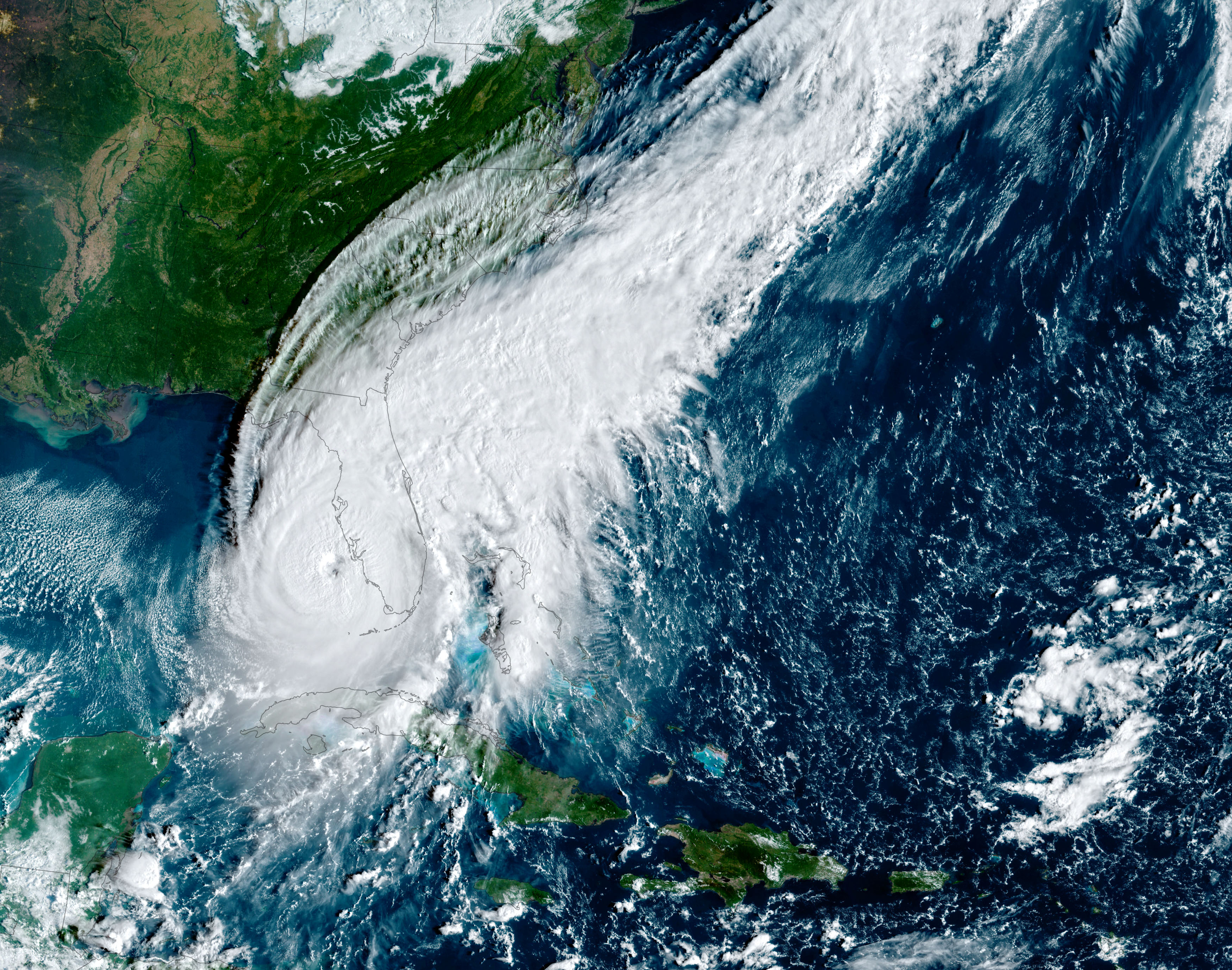
The 2025 Atlantic hurricane season delivered a stark reminder of what an active season looks like. With well-above-average storm activity and multiple landfalling hurricanes, organizations that had invested in early preparedness were far better positioned to protect their people, assets, and operations. As we look ahead to 2026, the question is not whether your organization will face tropical storm risk this year — it is whether you will be ready when it arrives.
The Atlantic hurricane season officially runs from June 1 through November 30, but preparation needs to start months earlier. Here is what risk managers, insurance professionals, and supply chain leaders should be tracking right now.
The 2025 Atlantic hurricane season was notably active, continuing a pattern of above-average activity that has defined recent years. Multiple named storms made landfall in the United States and Caribbean, causing billions of dollars in insured losses and significant supply chain disruptions across the Gulf Coast, Southeast, and mid-Atlantic regions.
For enterprise risk teams, 2025 reinforced several critical lessons:
These are not abstract risks. They are planning inputs for 2026.
See events like this as they unfold
DisasterAWARE Enterprise monitors 30+ hazard types worldwide in real time — with the population, infrastructure, and assets exposed under each one.
Based on the most recent 30-year climate averages (1991–2020), a typical Atlantic hurricane season produces approximately:
However, “average” has become increasingly misleading. Over the past decade, seasons have consistently exceeded these benchmarks. Warmer-than-normal sea surface temperatures across the Atlantic Main Development Region, reduced wind shear, and favorable atmospheric patterns have contributed to a stretch of hyperactive seasons. The transition from El Niño to La Niña conditions — which suppresses the wind shear that typically disrupts hurricane formation — has been a key driver of elevated activity in recent years.
NOAA will release its official 2026 seasonal hurricane outlook in late May, as it does each year. That forecast will provide specific predicted ranges for named storms, hurricanes, and major hurricanes, along with an overall probability of above-normal activity. Risk teams should treat the NOAA outlook as one important data point, but preparation should not wait for it.
Enterprise organizations with global operations need to think beyond the Atlantic. Tropical cyclone activity occurs across every ocean basin on different schedules:
A multinational insurer, manufacturer, or logistics company may face overlapping tropical cyclone threats in the Atlantic, Western Pacific, and Indian Ocean basins simultaneously. Monitoring a single basin is not sufficient for organizations with distributed global exposure.
Waiting until a storm enters the forecast cone is too late. The following steps should be completed well before the season begins.
Review the geographic distribution of your facilities, warehouses, data centers, key suppliers, and employee populations against historical tropical cyclone tracks. Asset protection tools can help automate this process. Identify assets within 100 miles of the coast and those in flood-prone inland corridors. If your exposure map has not been updated since last season, it is already out of date.
Conduct a tabletop exercise simulating a Category 3 or higher hurricane making landfall near your most concentrated asset cluster. Test communication chains, vendor contacts, alternate logistics routes, and decision-making authority during a 48-hour rapid escalation scenario. Document gaps and assign owners to close them before June.
Engage with your broker and underwriting teams now — not after the first named storm forms. Confirm coverage limits, deductible structures, and any parametric triggers. Evaluate whether your business interruption and contingent business interruption policies reflect current revenue concentrations and supply chain dependencies.
Define clear thresholds for when your team shifts from passive monitoring to active response. What storm intensity, proximity, or forecast probability triggers a stand-up call? Who receives alerts, and through what channels? Real-time monitoring platforms that provide geofenced alerting — rather than generic weather notifications — allow teams to focus on threats that actually intersect with their specific assets and operations.
Your hurricane preparedness is only as strong as your most vulnerable supplier. Identify Tier 1 and critical Tier 2 suppliers in hurricane-prone regions and confirm their continuity plans. Establish communication protocols for sharing status updates during active events, and pre-approve alternate sourcing arrangements that can be activated without delay.
The difference between a well-managed hurricane response and a reactive scramble often comes down to lead time and situational awareness. Traditional approaches — checking the National Hurricane Center website, waiting for news alerts, manually cross-referencing storm tracks against asset locations — consume valuable hours during the critical 72-to-48-hour pre-landfall decision window.
Modern risk intelligence platforms compress that cycle dramatically. DisasterAWARE, for example, monitors tropical cyclone activity across all ocean basins in real time, layering storm track forecasts against an organization’s asset locations, supply chain nodes, and employee populations. SmartAlerts deliver geofenced notifications when a specific threat intersects with a specific asset — eliminating the noise of irrelevant warnings. Exposure reports quantify the people, facilities, and infrastructure within a storm’s projected impact zone, giving leadership the data they need to make resource allocation decisions quickly.
With more than 300 integrated data layers — including storm surge models, flood zones, critical infrastructure, and population density — platforms like DisasterAWARE allow risk teams to move from “a hurricane is in the Gulf” to “this storm threatens 12 of our facilities, 340 employees, and 3 key distribution partners, and here is the projected timeline” in minutes rather than hours.
The 2026 hurricane season will arrive on schedule. Whether it delivers average or above-average activity, the organizations that fare best will be those that treated March through May as preparation season — auditing exposure, testing plans, and ensuring they have the monitoring infrastructure to make fast, informed decisions when it matters most.
If your organization’s hurricane preparedness still depends on manual tracking and reactive communication chains, now is the time to evaluate a more systematic approach. Explore DisasterAWARE’s hurricane monitoring and enterprise risk intelligence capabilities to see how real-time situational awareness can strengthen your 2026 readiness, or start a free trial to see the platform in action before hurricane season begins.
DisasterAWARE helps organizations understand the risk and impact from global natural disasters and catastrophes. Our platform and intelligence are used before, during, and after events to monitor emerging hazards, identify exposure, assess damage, and minimize disruption to people, assets, and operations. We specialize in hazards such as tropical cyclones across every ocean basin, floods, storm surges, severe convective storms, wildfires, and earthquakes. We also provide post-catastrophe analytics for insurers and damage assessment for buildings and infrastructure powered by satellite imagery after a tropical storm. Our real-time, early warning, and historical data helps organizations strengthen preparedness, response, and resilience.



Decision-ready intelligence for understanding what's happening, what is impacted, and what to do next. Global hazard, severe weather, catastrophe, and physical risk intelligence trusted by governments, enterprises, insurers, humanitarian organizations, and technology platforms worldwide.
Request DemoContact Us

