


Why Insurers Need Both to Understand Catastrophe Risk
For decades, catastrophe models have been foundational to insurance risk management. They help insurers estimate the probability, severity, and financial impact of events that may occur in the future—from hurricanes and earthquakes to floods, wildfires, severe convective storms, and other natural hazards.
But catastrophe models are designed primarily to answer a forward-looking question:
What could happen, and what could it cost?
Historical catastrophe intelligence answers a different question:
What actually happened, where did it happen, and what can we learn from the event?
For insurers, these are not competing approaches. They are complementary sources of intelligence. Catastrophe models provide a probabilistic view of risk. Historical catastrophe intelligence provides an event-level view of reality. Together, they can give insurers a more complete understanding of catastrophe exposure—from portfolio planning and underwriting to catastrophe response, claims, loss assessment, and post-event analysis.
A catastrophe model typically combines hazard, exposure, vulnerability, and financial information to estimate potential losses.
A simplified view looks like: Hazard → Exposure → Vulnerability → Financial Loss
Models can simulate thousands—or millions—of potential events to estimate metrics such as:
This makes catastrophe models extremely valuable for understanding potential future loss.
Historical catastrophe intelligence starts somewhere else. Instead of simulating an event, it reconstructs an event that has already occurred.
Observed event → Hazard evolution → Geographic footprint → Exposure interaction → Impact
The objective is not to predict what might happen. It is to create a structured, geospatial record of what happened, when it happened, where it happened, and how the hazard evolved over time. That distinction is important.
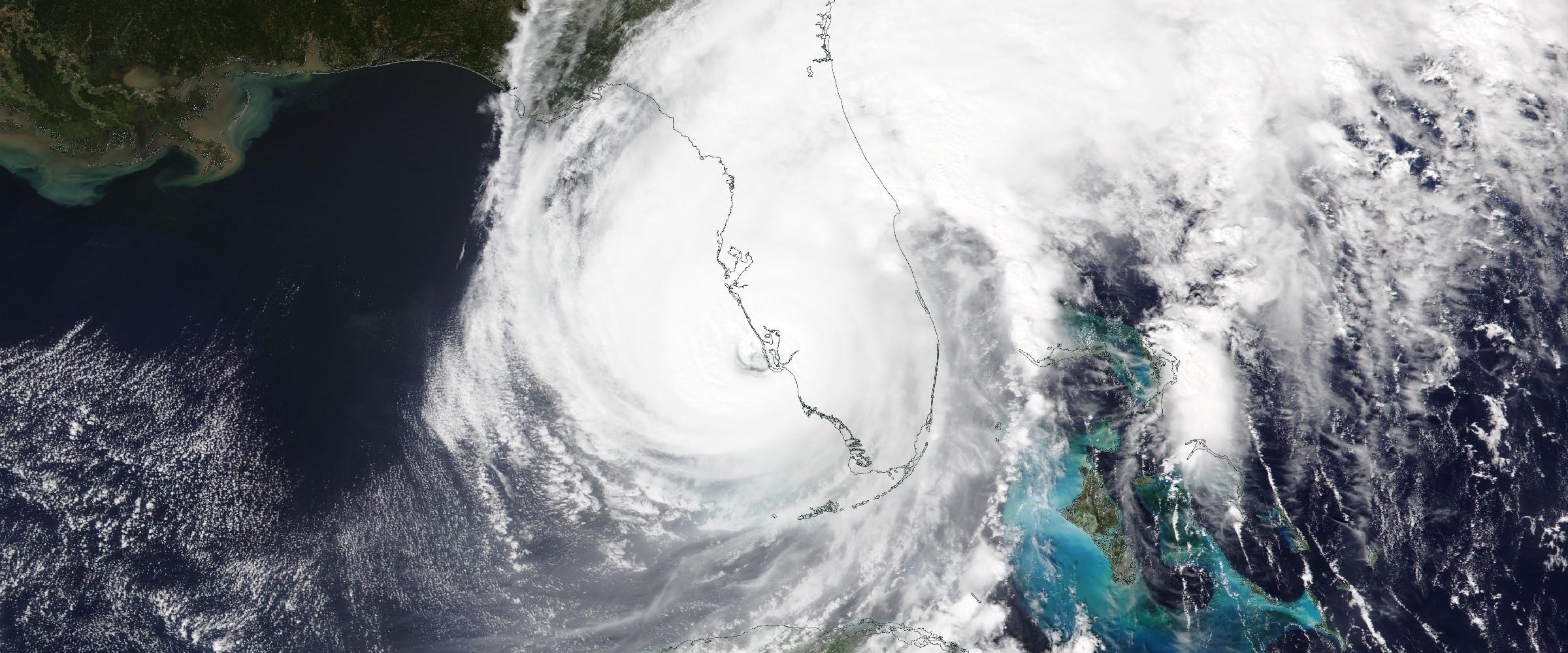
Historical catastrophe intelligence is a structured, event-level representation of past natural catastrophes. Rather than treating a hurricane, wildfire, or flood as a single polygon or a single historical record, historical intelligence can reconstruct the event across time and geography.
For example, a historical hurricane record might include:
The result is a much richer representation of the catastrophe than simply knowing that an event occurred in a particular region.
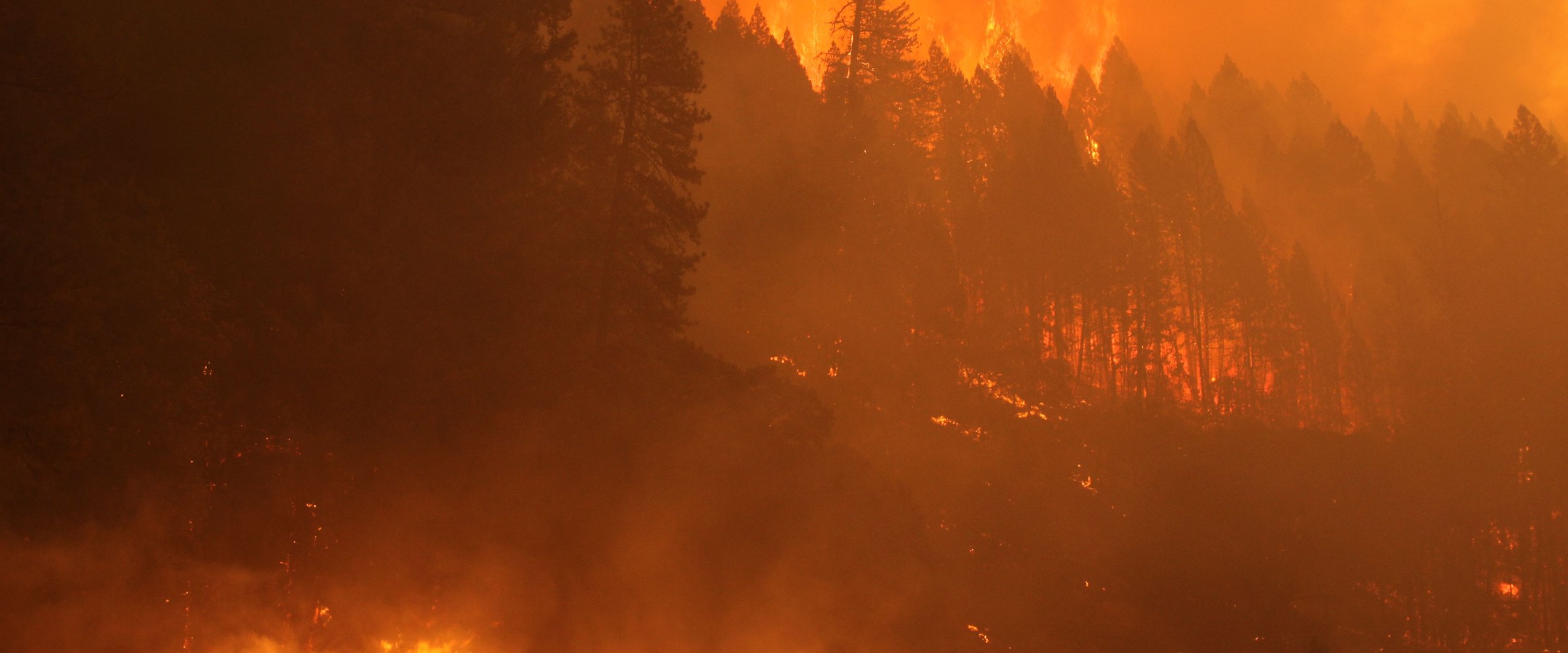
The same principle applies across hazards. A historical wildfire can be reconstructed through its ignition and evolution, perimeter progression, smoke, evacuation zones, air quality, and affected locations. A historical flood can incorporate precipitation, river conditions, modeled or observed flood depth, inundation extent, and downstream impacts. A severe convective storm can be represented through tornado tracks, hail swaths, wind reports, warnings, radar-derived information, and observed damage.
This transforms historical events from static records into queryable intelligence.
One of the simplest ways to understand the distinction is to compare a simulated event with an observed event.
| Catastrophe Models | Historical Catastrophe Intelligence |
|---|---|
| Primarily forward-looking | Primarily backward-looking |
| Probabilistic | Observational / evidence-based |
| Simulates potential events | Reconstructs actual events |
| Often focused on financial loss | Focused on event evolution and impact |
| Uses vulnerability assumptions | Can incorporate observed impacts |
| Generates scenarios and probabilities | Provides event-level historical evidence |
| Useful for portfolio risk | Useful across underwriting, claims, response, and analysis |
| Answers "What could happen?" | Answers "What happened?" |
Neither replaces the other. The opportunity for insurers is to connect them.
Insurance organizations make decisions based on both expected future risk and evidence from past events.
Historical event intelligence can support decisions throughout the insurance lifecycle.
Historical catastrophe intelligence can help underwriters understand how a location or portfolio has actually experienced natural hazards.
Instead of simply asking:
Is this property located in a hurricane or wildfire zone?
An insurer can ask:
Which hurricanes, floods, wildfires, hailstorms, or tornadoes have affected this location, how severe were they, and what happened?
That additional context can help underwriters evaluate individual risks and geographic concentrations.
A portfolio may contain thousands or millions of insured locations. Historical event data allows insurers to overlay those locations against the footprints of past catastrophes.
This can reveal:
Historical intelligence can therefore serve as an empirical layer alongside modeled accumulation analysis — the historical exposure intelligence view of a portfolio.
When a catastrophe occurs, insurers need to move quickly. (Historical intelligence for claims investigations covers this workflow in depth.) Historical event intelligence can provide a common geospatial record of the event that helps teams understand:
This can help claims and catastrophe response teams prioritize resources and identify potentially affected policyholders earlier.
Historical hazard intelligence can also provide important context after a claim. Consider a property claim following a hurricane.
Instead of relying solely on the claimant's location and reported loss, an insurer can examine the historical event record:
Was the property inside the observed wind footprint?
What precipitation occurred nearby?
Was the property within a flood extent?
When did the hazard reach the location?
Were there secondary hazards in the area?
The answers do not determine coverage or causation by themselves. But they provide valuable objective context for claims investigation and loss assessment.
One of the biggest limitations of treating historical catastrophes as simple event polygons is that catastrophes are dynamic. A hurricane does not exist as one static polygon. A wildfire does not simply have a beginning and an ending perimeter. A flood does not occur uniformly across an entire inundation area.
The hazard evolves over time.Historical catastrophe intelligence can capture that evolution.
Consider a hurricane. A useful historical representation might include the storm's:
Track → Wind field → Precipitation → Storm surge → Flooding → Secondary hazards → Impacts
Each layer provides a different piece of the event story.
Similarly, a wildfire can be represented as:
Ignition → Fire growth → Perimeter progression → Smoke → Evacuations → Air-quality impacts → Damage
This temporal and multi-layered approach provides insurers with a much more granular understanding of how catastrophe risk manifested in the real world.
Another important distinction is the difference between observed and modeled information. Not every historical hazard measurement is directly observed. Some historical datasets necessarily rely on modeling, interpolation, remote sensing, or reconstruction.
That is why transparency matters.
Historical catastrophe intelligence should clearly identify how each data layer was produced. For example:
For insurers, this distinction can be particularly important. A historical event record becomes more useful when users can understand not only what the data says, but also how the data was generated.
Put real catastrophe evidence beside your models
Reconstructed, verified historic catastrophes — hurricane, wildfire, flood, hail, tornado, wind, and earthquake — delivered through APIs, GIS services, and dashboards your teams already use.
The most powerful use case is not choosing one or the other. It is combining them.
Consider an insurer evaluating hurricane risk.
A catastrophe model might estimate:
A portfolio has a 1% annual probability of experiencing a loss exceeding $250 million.
Historical catastrophe intelligence can then help answer:
How has this portfolio actually performed when exposed to major hurricanes in the past?
Those are fundamentally different questions.
The model provides a probabilistic estimate of future loss. Historical intelligence provides empirical evidence from real events. Used together, insurers can compare:
with
That comparison can reveal important insights.
For example:
It is important to make the distinction clear. Historical catastrophe intelligence cannot tell an insurer everything a catastrophe model can.
A historical catalog cannot, by itself, provide:
Those are areas where catastrophe models remain essential.
But the reverse is also true.
A catastrophe model cannot tell an insurer exactly what happened during every historical event at every location. That is where historical catastrophe intelligence adds value. The two approaches answer different questions.
The insurance industry increasingly needs to connect multiple forms of risk intelligence.
A useful framework is:
What happened?
Observed and reconstructed catastrophe intelligence provides evidence from past events.
What is happening now?
Real-time event intelligence provides situational awareness during an active catastrophe.
What is likely to happen next?
Weather forecasts, hazard forecasts, and predictive models provide forward-looking intelligence.
What could happen over the long term?
Catastrophe models estimate the probability and financial consequences of potential future events.
Together, these create a much more complete catastrophe intelligence framework:
Historical → Current → Forecast → Probabilistic
Each layer serves a different insurance decision.
There is also an important distinction between a historical dataset and historical intelligence.
A database may tell you: Hurricane X occurred in 2017.
Historical intelligence can tell you: Hurricane X passed within 10 miles of these insured locations, produced these wind conditions, generated this precipitation, caused flooding in these areas, triggered these warnings, and affected these populations during this specific period.
The difference is context.
Historical intelligence connects the event to geography, time, hazards, exposure, and impact. That makes the data actionable.
For insurers, one of the biggest opportunities is turning historical catastrophe records into a queryable data layer.
Instead of manually researching individual events, users can ask questions such as:
This enables historical catastrophe intelligence to become part of automated insurance workflows rather than a research exercise.
Catastrophe models transformed insurance by making complex natural catastrophe risk quantifiable. The next evolution is making historical catastrophe experience equally accessible, structured, and machine-readable.
Insurers increasingly need more than a list of past events. They need to understand how those events evolved, where they occurred, what hazards they produced, which locations they affected, and what actually happened on the ground.
Historical catastrophe intelligence provides that empirical layer. Catastrophe models estimate the future. Historical catastrophe intelligence documents the past. Real-time intelligence explains the present.
And when these capabilities are connected, insurers can build a more complete view of catastrophe risk—one that combines probability with evidence, models with observations, and potential loss with actual event experience.
Explore the historical record
Decades of reconstructed, verified catastrophes — browse the Historical Event Intelligence overview, or request sample data for your own portfolio.
What is the difference between a catastrophe model and historical catastrophe intelligence? A catastrophe model is forward-looking and probabilistic: it simulates events that have not happened to estimate potential future loss. Historical catastrophe intelligence is backward-looking and observational: it reconstructs events that did happen, across time and geography. Models answer "what could happen?"; historical intelligence answers "what happened?"
Does historical catastrophe intelligence replace catastrophe models? No. A historical catalog cannot produce probabilistic loss distributions, return-period estimates, vulnerability curves, or future climate scenarios — those remain the domain of catastrophe models. The two answer different questions and are strongest used together.
How is historical catastrophe intelligence different from a historical weather database? A database records that an event occurred. Historical intelligence connects the event to geography, time, hazards, exposure, and impact — which insured locations were affected, what conditions they experienced, and how the hazard evolved. The difference is context, and it is what makes the data queryable.
Can historical catastrophe data be used in automated insurance workflows? Yes. When historical events are structured as a queryable geospatial layer, insurers can ask portfolio-level questions — which hurricanes affected these locations, which properties fall inside historical wildfire perimeters, which counties saw repeated tornado activity — as automated queries rather than manual research projects.
Is all historical hazard data directly observed? No, and the distinction matters. Some layers are official government observations, radar or satellite measurements, gauge readings, or surveyed damage; others are modeled, interpolated, or reanalysis products. A historical event record is more useful when it identifies how each layer was produced.




Decision-ready intelligence for understanding what's happening, what is impacted, and what to do next. Global hazard, severe weather, catastrophe, and physical risk intelligence trusted by governments, enterprises, insurers, humanitarian organizations, and technology platforms worldwide.
Request DemoContact Us

