


The Risks That Once Sat in the Background Are Moving to the Foreground
For much of the history of catastrophe risk management, insurance attention has centered on the largest and most obvious natural catastrophes.
Major hurricanes.
Large earthquakes.
Severe floods.
Catastrophic wildfires.
These events can generate extraordinary insured losses and remain critical to underwriting, portfolio management, and reinsurance. But a fundamental shift is taking place.
Increasingly, insurers are dealing with frequent, geographically dispersed events that may individually generate moderate losses but collectively produce significant portfolio impact. These are often referred to as secondary perils. Hail. Tornadoes. Severe convective storms. Inland flooding. Wildfires. Winter storms. Extreme precipitation. Wind events.
The term "secondary" can be misleading. For insurers, these hazards are becoming increasingly important drivers of loss, accumulation, claims volume, and operational complexity. The result is a changing definition of catastrophe risk.
Traditionally, secondary perils have been distinguished from primary perils based largely on their historical contribution to catastrophic insurance losses.
Primary perils have generally included hazards such as:
Secondary perils have often included:
But the distinction is not absolute. A "secondary" peril can become a major catastrophe.
A single severe convective storm outbreak can affect thousands of properties across multiple states. A wildfire that is relatively small geographically can produce enormous insured losses when it intersects a dense community. An inland flood can cause significant damage far from a coastline.
The more useful distinction is therefore not simply primary vs. secondary. It is understanding how frequency, severity, geographic distribution, and exposure combine to create insurance risk.
Several forces are contributing to the growing importance of secondary perils.
Insurance exposure continues to grow in areas vulnerable to natural hazards.
More homes, businesses, vehicles, infrastructure, and economic activity mean that even moderate events can generate significant insured losses.
A hazard does not need to become dramatically more severe to produce larger losses.
If more insured assets are located in its path, the financial consequences can increase substantially.
Development patterns are also changing the relationship between hazards and insured losses. Communities continue to expand into areas exposed to:
As development expands, the intersection between hazard footprints and insured property becomes increasingly important.
The question is no longer simply:
Where does the hazard occur?
It is:
Where does the hazard occur relative to insured exposure?
That distinction is critical for insurers.
One of the defining characteristics of many secondary perils is frequency. A major hurricane may be relatively infrequent for a particular geography. Hail and severe convective storms can occur repeatedly. Wildfires can occur across large regions during an entire season. Inland flooding can affect properties far beyond traditional coastal catastrophe zones.
This creates a different risk-management challenge. A portfolio may not experience one enormous event. Instead, it may experience dozens or hundreds of smaller events. Each event creates:
Claims → Adjusting costs → Operational demands → Capital impact → Cumulative loss
The aggregation of these events can become more important than any single event.
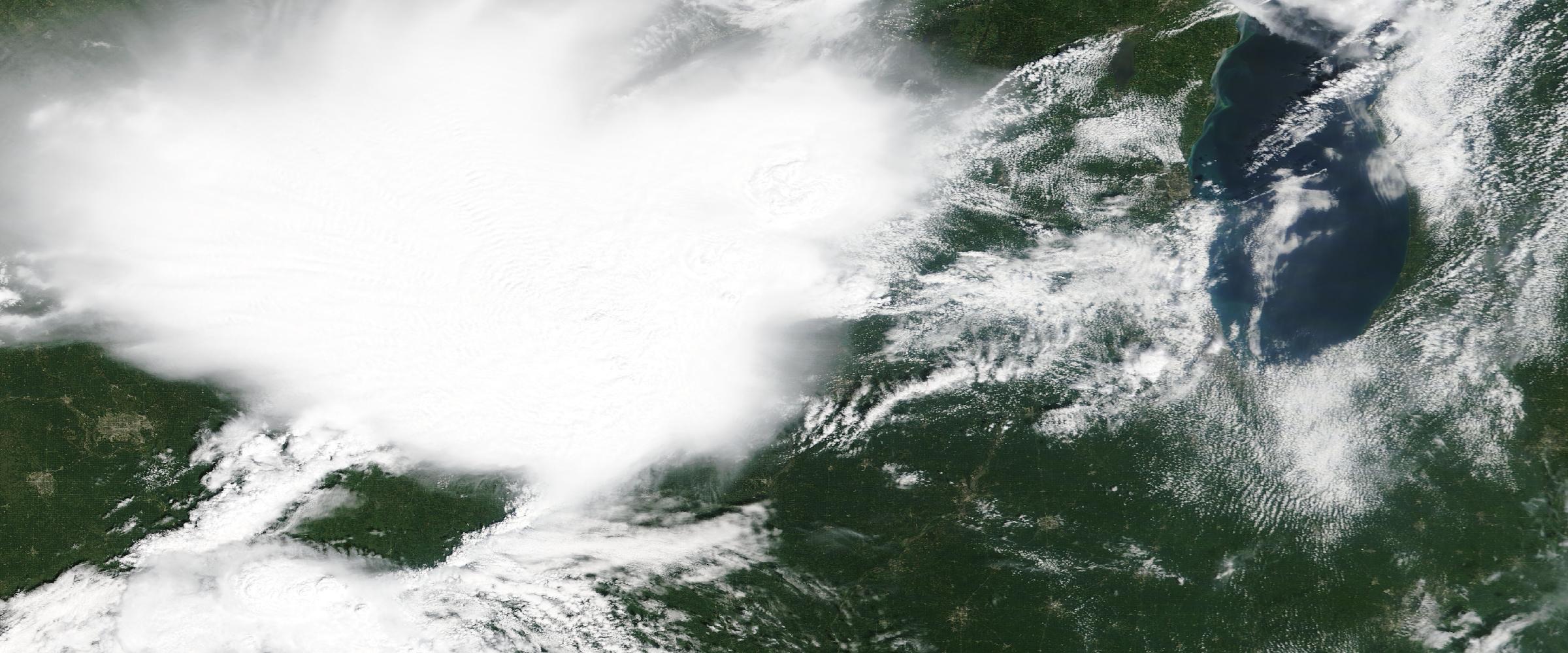
Severe convective storms demonstrate why the traditional catastrophe framework is changing.
A single weather system can generate multiple hazards:
Thunderstorms → Hail → Tornadoes → Straight-line wind → Heavy precipitation → Flash flooding
Each hazard can affect different locations. One part of a storm system may produce large hail. Another may produce tornadoes. Another may generate damaging wind. Another may produce extreme rainfall and flooding.
For insurers, treating the entire event as simply a "storm" loses important information. The individual hazard footprints matter. So does the timing. So does the location. And so does the exposure intersecting each footprint.
Secondary perils also create a major data challenge. Insurance organizations increasingly need to understand not only individual hazards, but how multiple hazards interact during the same event or across multiple events.
Consider a hurricane. The primary hazard may be wind. But the same event can produce:
A wildfire can produce:
This creates a multi-peril insurance problem. The insurer needs to understand the event ecosystem, not simply one hazard.
Catastrophe models remain essential for understanding potential future losses. But secondary perils can be particularly challenging to model and manage because they are often:
This makes high-quality observational and historical data increasingly valuable. Insurers need to understand not only what models predict, but also what has actually happened.
Historical event intelligence can provide an empirical layer for analyzing these risks.
See every peril affecting your portfolio
Reconstructed, verified historic catastrophes plus real-time monitoring across 30+ hazard types — delivered through APIs, GIS services, and dashboards your teams already use.
A critical challenge with secondary perils is accumulation.
Imagine an insurer with 500,000 property locations. A single hail event might affect 2,000 properties. A tornado outbreak might affect another 1,500. Several flooding events might affect thousands more.
Individually, these events may not resemble a major hurricane catastrophe. Collectively, however, they can have a material effect on:
This means insurers increasingly need to analyze catastrophe risk at the portfolio level, not just event by event.
Understanding secondary perils requires detailed historical evidence. An insurer may want to know:
These questions require more than a list of catastrophe names and dates. They require structured, geospatial, event-level historical intelligence.
For secondary perils, a simple event perimeter is often insufficient.
Consider hail. A storm may produce a highly variable hail footprint. The difference between experiencing no hail and experiencing damaging hail may be only a few miles.
The same applies to tornadoes. A tornado track can be narrow but highly destructive.
Wildfire risk can vary dramatically across a relatively small geographic area.
Flood depth can change substantially from one property to another.
This means insurers need increasingly granular hazard information. The value comes from understanding the specific footprint and intensity of the hazard, rather than simply knowing that an event occurred in a county or metropolitan area.
The growing importance of secondary perils does not simply create risk. It creates an opportunity for insurers to become more precise.
Better historical intelligence can help insurers identify:
Which locations repeatedly experience certain hazards?
Which properties have unusually high exposure?
Where are accumulations developing?
Which risks look similar geographically but have very different historical hazard experiences?
This can support more informed underwriting decisions. Rather than applying broad geographic assumptions, insurers can incorporate more granular evidence into risk selection and portfolio management.
The value of secondary-peril intelligence extends beyond underwriting. When a severe storm, hail event, tornado outbreak, wildfire, or flood occurs, claims organizations need to rapidly determine:
Event intelligence can help transform a large and complex catastrophe into a geographically prioritized claims workflow. Instead of treating every policyholder in a broad geographic area equally, insurers can identify locations that intersect the actual hazard footprint.
Secondary perils also highlight the importance of speed. Because these events can be frequent and geographically dispersed, insurers cannot afford to treat every event as a lengthy research project. They need automated intelligence. That means:
Detection → Classification → Footprint → Exposure → Impact
The faster this information becomes available, the faster insurers can begin assessing potential portfolio impact. For event response and claims teams, hours can matter. For underwriting and portfolio management, years of historical event data can matter. The underlying intelligence infrastructure needs to support both.
The insurance industry's traditional definition of a catastrophe has often centered on the size of a single event. But secondary perils suggest a broader definition.
A catastrophe can be:
Large in severity.
Large in frequency.
Large in geographic distribution.
Large in claims volume.
Or large because of the cumulative effect of many events.
That changes how insurers need to think about catastrophe risk. The question becomes less about identifying only the biggest events and more about understanding the full distribution of hazards affecting a portfolio.
The future of catastrophe risk management is unlikely to be defined by a simple distinction between primary and secondary perils.
Instead, insurers will increasingly need a unified view across:
Hurricanes, earthquakes, major floods, and large wildfires.
Hail, tornadoes, severe convective storms, inland flooding, winter storms, and other frequent hazards.
Events where multiple hazards occur simultaneously or sequentially.
What actually happened and where.
What is happening now.
What is likely to happen next.
The goal is a single intelligence framework that connects all of these perspectives.
Secondary perils are changing insurance risk because they require insurers to become more granular, more data-driven, and more responsive.
The most important question is no longer simply:
How much risk does this portfolio have?
It is increasingly:
What hazards have affected this portfolio, how frequently, how severely, and where—and what is happening right now?
Answering that question requires more than a catastrophe model. It requires detailed event intelligence. Historical event footprints. Observed hazard data. Real-time monitoring. Forecast intelligence. Exposure analysis. Multi-peril context.
For insurers, the opportunity is to connect these layers into a single view of catastrophe risk. Because the risks that once sat in the background are increasingly becoming central to insurance performance.
And in a world of more frequent, distributed, multi-peril events, understanding the details of every catastrophe—not just the largest ones—may become one of the industry's most important competitive advantages.
Explore the historical record
Decades of reconstructed, verified catastrophes — browse the Historical Event Intelligence overview, or request sample data for your own portfolio.
What are secondary perils in insurance? Secondary perils are hazards that have historically contributed less to catastrophic insured losses than primary perils like major hurricanes and earthquakes — typically hail, tornadoes, severe convective storms, inland flooding, winter storms, extreme precipitation, windstorms, and smaller wildfires. The label describes historical loss contribution, not severity.
Why are secondary perils becoming more important to insurers? Growing insured exposure and continued development into hazard-prone areas mean a hazard does not have to become more severe to produce larger losses. Because secondary perils are frequent and geographically dispersed, a portfolio may face dozens or hundreds of moderate events whose aggregate effect on claims volume, loss ratios, and capital exceeds any single event.
Why are secondary perils harder to model than primary perils? They tend to be more frequent, more localized, more geographically dispersed, more variable in severity, and less concentrated around a single predictable footprint. That makes observational and historical event data especially valuable alongside modeled estimates.
What is the multi-peril problem? A single event often produces several hazards at once. A hurricane can generate wind, extreme rainfall, inland flooding, storm surge, tornadoes, landslides, and power outages; a wildfire can generate fire, smoke, poor air quality, evacuations, and infrastructure disruption. Treating the event as one hazard loses the information that determines which locations were actually affected.
How does event intelligence help claims teams with secondary perils? It turns a large, dispersed catastrophe into a geographically prioritized workflow. Rather than treating every policyholder in a broad region equally, claims teams can identify which locations intersect the actual hazard footprint, how severe conditions were there, and where to deploy adjusters first.




Decision-ready intelligence for understanding what's happening, what is impacted, and what to do next. Global hazard, severe weather, catastrophe, and physical risk intelligence trusted by governments, enterprises, insurers, humanitarian organizations, and technology platforms worldwide.
Request DemoContact Us

