


A radar-indicated warning for rural southeastern El Paso County, 34 miles from downtown, lasting 24 minutes — and the search spike it produced
No tornado hit Colorado Springs on September 20, 2026. What happened was narrower than the alerts made it feel: at 9:21 PM Mountain time, the National Weather Service office in Pueblo issued a tornado warning for the southeastern corner of El Paso County — the county Colorado Springs sits in — and let it expire on schedule at 9:45 PM. The warned area was open country roughly 34 miles southeast of downtown. No tornado, funnel cloud, or tornado damage was reported anywhere in Colorado that night.
If you got an alert on your phone, searched "tornado warning Colorado Springs," and found nothing that told you what actually happened, this is that page.
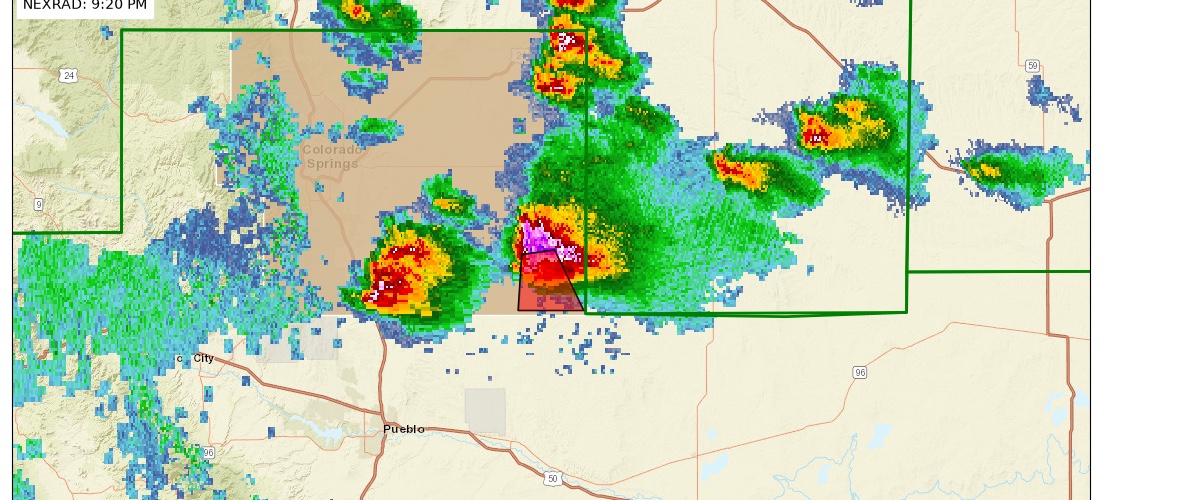
The warning polygon (red) against radar at 9:20 PM. The tan area at upper left is Colorado Springs. Image: Iowa Environmental Mesonet, NWS NEXRAD; basemap Esri.
The full product is public. The parts that matter:
The warning polygon's nearest edge was about 34 miles from downtown Colorado Springs; its centre was about 39 miles out. The city was never inside it.
Wireless Emergency Alerts are targeted at the warning polygon, but the cell towers that carry them cover more ground than the polygon does, and a tornado warning for "El Paso County" reads, to most people, as a warning for Colorado Springs. The result on September 20 was a county-shaped alert for a storm that was, by the Weather Service's own description, a rural one.
That gap — between where an alert is felt and where the hazard actually is — is the single most common source of confusion in severe weather, and it is why we draw a hard line between an alert and an observed event everywhere on this site.
The NWS collects Local Storm Reports from spotters, emergency managers, and the public after every severe weather event. For Colorado between midnight September 20 and noon September 21 there were 58 reports — hail near Genoa and Holyoke on the eastern plains, rainfall totals, wind. Zero tornado or funnel cloud reports. The only report from El Paso County was a rainfall total near Monument, hours before the warning.
The warning was issued on a radar signature, the storm moved south over open ground, and the signature did not produce a tornado that anyone saw or that damaged anything. That is a normal outcome. Historically, roughly seven in ten tornado warnings do not verify with a tornado; radar-indicated warnings are issued precisely because waiting for visual confirmation would cost the minutes that matter.
The question behind the search — does Colorado Springs get tornadoes? — has a real answer in our archive. Within 80 km of the city, DisasterAWARE holds 417 tornado alert records from 2017 through this September. The distribution is spiky: 178 of them came in 2023 alone, 76 in 2025, and the rest of the years sit between 2 and 49. The highest rating any of those records carries is EF2, in 2023 and again in 2025; the closest rated records to downtown are EF1s from summer 2023, 2024 and 2025.
Two honest caveats about that record. Those are alert records — one storm can generate several warnings and watches as it moves — so 417 is not 417 tornadoes. And a rating on a record tells you a tornado was surveyed somewhere in that warning's area, not that it passed through the city. The pattern is still clear: the Pikes Peak region gets a handful of weak, short-lived tornadoes most summers, almost always on the plains east and southeast of the city — which is exactly where September 20's storm was.
The Colorado Springs tornado page on explore now carries a "recent activity" section that says all of this in five lines: the warning, its source, its duration, its distance from the city, and its outcome — labelled as an alert, not an event. For the record, the DisasterAWARE platform registered this warning as a hazard at 9:27:38 PM — six minutes and thirty-eight seconds after the Weather Service issued it — with the warning polygon attached. Its exposure model then put the numbers on what was inside that polygon: about 53 people in 21 households, roughly $24 million of capital, three schools, no hospitals. Those are small figures because the warned area was rural ground southeast of the city, and that is the whole point — "Colorado Springs" in the alert and "Colorado Springs" on the ground were different places. Live alerts within 300 km already appear on every city page and refresh hourly; the recent-activity section is the part that stays after the alert expires, so the next person who searches this event gets the answer instead of a blank map.
That is the shape of thing we think a hazard page should do: show what is happening, then show what happened, and never confuse the two.
Ask this question about any city, any event
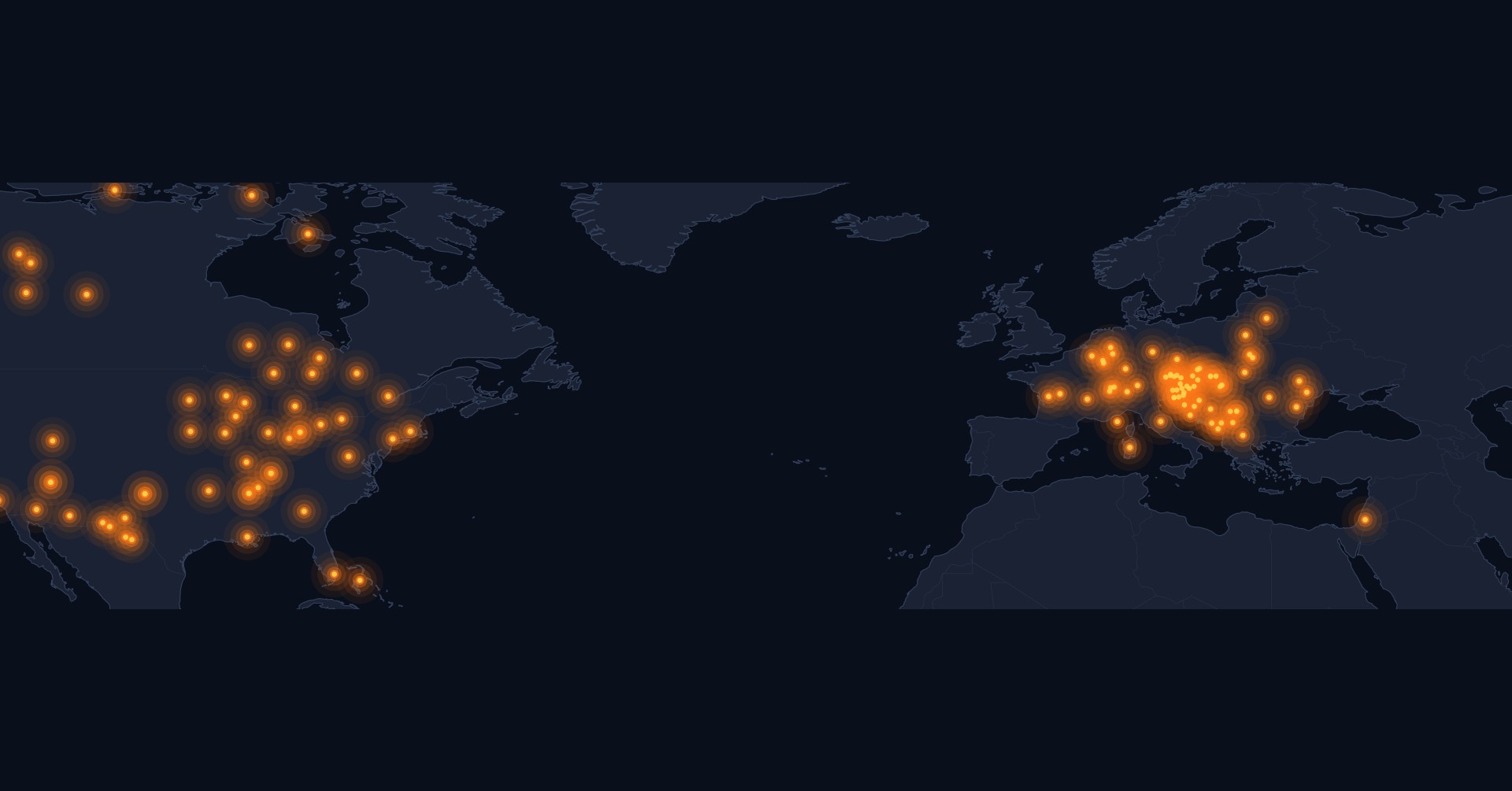
DisasterAWARE Historical Event Intelligence holds 546,000+ hazard records with footprints, detection source, and exposure — the dataset that answers whether an alert became an event.
Explore the historical record
Decades of reconstructed, verified catastrophes — browse the Historical Event Intelligence overview, or request sample data for your own portfolio.
Was there a tornado in Colorado Springs on September 20, 2026? No. The National Weather Service issued one tornado warning that evening, for rural southeastern El Paso County about 34 miles from downtown, based on radar-indicated rotation. It expired after 24 minutes and no tornado or funnel cloud was reported anywhere in Colorado that night.
Why did I get a tornado warning alert in Colorado Springs? Wireless Emergency Alerts go out over cell towers whose coverage is broader than the warning polygon, and the warning named El Paso County. The storm itself stayed over open country southeast of the city, as the warning text stated.
What does "radar indicated" mean on a tornado warning? It means the warning was issued on a rotation signature seen on Doppler radar rather than on a report from a spotter or a sighting. Radar-indicated warnings are issued early on purpose; historically most do not verify with a tornado on the ground.
Does Colorado Springs get tornadoes? Yes, occasionally and usually weakly. Within 80 km of the city, DisasterAWARE's archive holds 417 tornado alert records since 2017, concentrated on the plains east and southeast of the city. The highest rating in that archive is EF2.









-min.png)
.png)

.png)



Decision-ready intelligence for understanding what's happening, what is impacted, and what to do next. Global hazard, severe weather, catastrophe, and physical risk intelligence trusted by governments, enterprises, insurers, humanitarian organizations, and technology platforms worldwide.
Request DemoContact Us

